New Zealand vs India ODI Squads: Why the Last Two Matches Will Look Different
New Zealand have named different groups for the first three and final two ODIs against India, according to the ICC’s 11 October 2026 squad report. Mitchell Santner captains both groups. The change allows some Test players to leave after the third ODI to prepare for the Wellington Test beginning on 19 November.
Checked: 13 October 2026. The selection details are announced facts. The discussion of what to watch is WorldCupWatch analysis; it is not a confirmed playing eleven or a prediction of the series result.
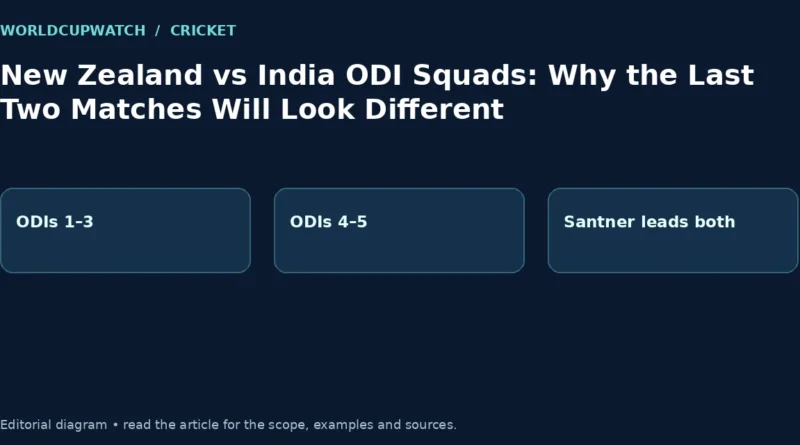
The announced split in one table
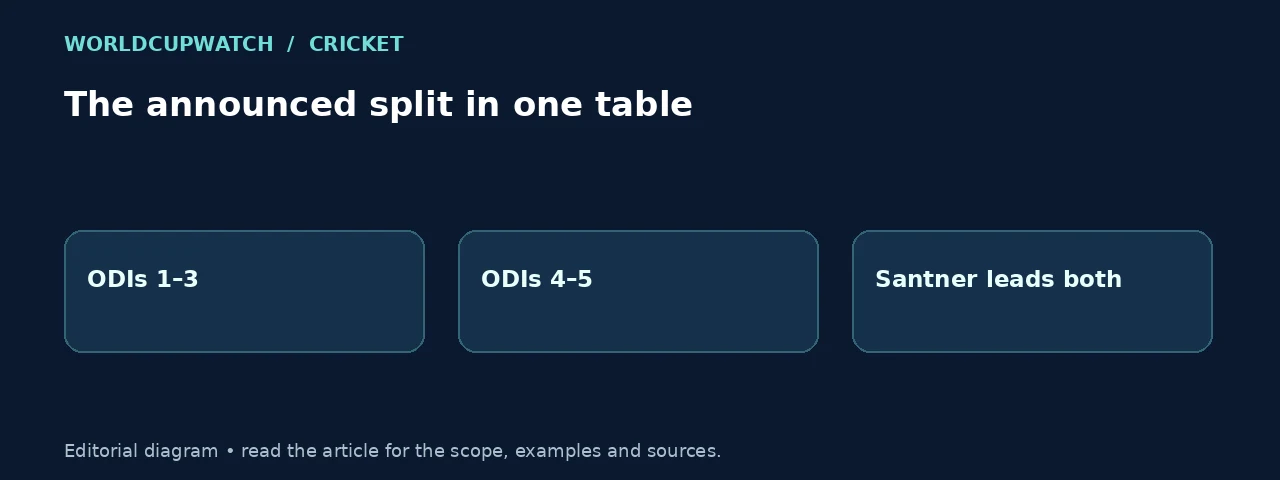
| Part of the series | Key announced selection context |
|---|---|
| ODIs 1–3 | Rachin Ravindra returns from a shoulder injury; the opening group includes players preparing for the Test series |
| ODIs 4–5 | Finn Allen, Lockie Ferguson and Tim Seifert are included for the final two matches |
| Both groups | Mitchell Santner is captain |
The ICC squad report provides the complete lists. A squad member is available for selection in the specified group; that is different from confirmation that the player will appear in every match.
Coach Rob Walter described the ODIs as “valuable preparation for that event”, referring to the approaching ODI World Cup. The quoted wording is from the ICC report. The same report explains the preparation time being created for the following Tests.
The schedule behind the decision
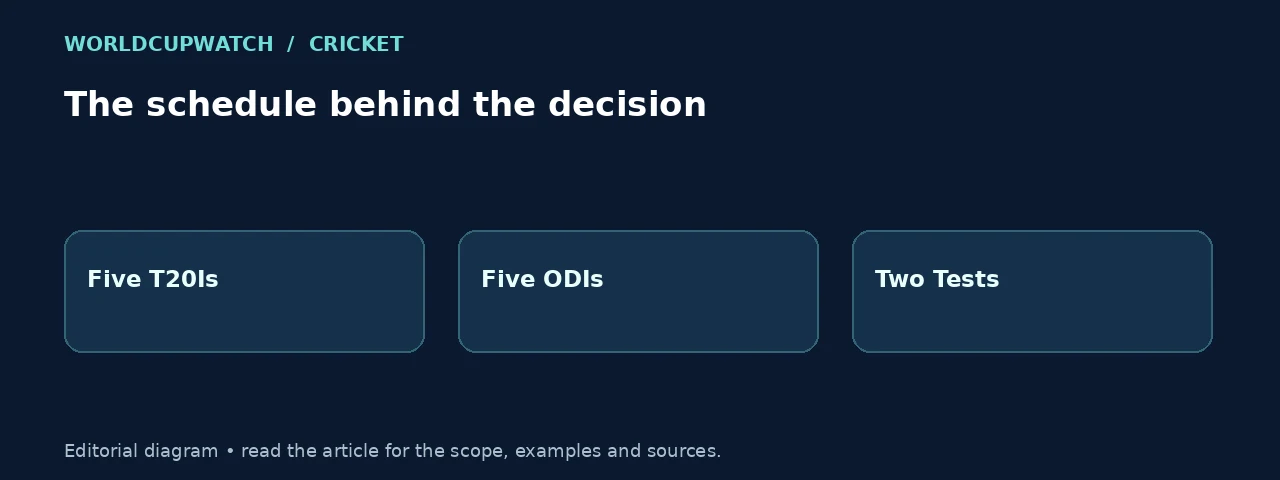
The ODI series runs from 4 to 15 November, with matches in Auckland, Wellington, Hamilton and Mount Maunganui. The five T20Is precede it, and two Tests follow. Our India cricket schedule records the complete announced tour dates.
The itinerary is independently set out in the ICC’s New Zealand home-summer announcement. It shows why a tour can be one continuous programme while selection still changes between formats and within a white-ball series.
For fans, the important practical detail is to attach the match number to a squad claim. “Named for India’s tour” is too broad if a player is specifically in the group for ODIs four and five. A headline about a return should identify which part of the programme it concerns.
What to watch when the teams change
Analysis: the final two ODIs can provide a useful view of how a different combination approaches the same opponent. Compare the roles actually assigned in the playing eleven, then the scorecards, before deciding that a change of personnel has improved or weakened a side.
A hitter moving into the squad may be asked to perform a different role from the departing player. A fast bowler’s overs may come at different stages. Raw runs or wickets alone can miss those differences. Match reports should identify the batting position and bowling phase before making an equivalent-performance comparison.
The World Cup context also needs care. Preparation is an objective, not a guarantee of a final tournament place for a player. Conditions, form, availability and later selection decisions can all alter the eventual squad. These November ODIs will supply evidence; they do not settle every future choice in advance.
New Zealand’s Test preparation belongs to the separate World Test Championship framework. ODI results are not WTC points. The two objectives can influence scheduling and player management without sharing the same table.
Related guides and original reporting
- India cricket schedule 2026–27 keeps all three tour formats and host-local dates together.
- Cricket World Cup 2027 explains the ODI event being prepared for and New Zealand’s announced group context.
- ICC rankings explained separates an ODI team rating from a Test championship table.
- Cricket rules explained introduces format differences and the scorecard statistics used in our analysis.
Original sources: ICC squad report, 11 October 2026 and ICC tour announcement, 3 June 2026. Updates and corrections: contact WorldCupWatch.