Spain Win World Cup 2026: Ferran Torres Breaks Argentine Hearts as Messi Walks Off in Tears
Shadows had stretched across MetLife Stadium and the World Cup 2026 final was drifting towards penalties when the moment finally came. Thirty-nine seconds into the second half of extra time, a ball bounced loose eight yards from the Argentina goal, and Ferran Torres swung his left boot at it. The net rippled just under the crossbar. Spain win World Cup 2026, their second world title and their first since 2010, and one of the most one-sided finals in living memory ended 1-0.
For Spain, it was release after a long, suffocating afternoon of near misses. For Argentina, it was the cruellest kind of ending. Lionel Messi collected a runners-up medal and walked off the field in tears, almost certainly for the last time at a World Cup. Two teams, two entirely different nights. Here is the full story of how it happened.
Last updated: July 20, 2026.
spain win world cup 2026: One hundred and five minutes of siege
Finals are supposed to be tight, nervous, finely balanced affairs. This one was not. It was a siege.
Spain had the ball for roughly sixty per cent of the game and used it like a battering ram. They finished with twenty attempts on goal, twelve of them on target. Argentina, the defending champions, managed two shots in one hundred and twenty minutes of football, and not one of them forced a save. Their first attempt did not arrive until the second half of extra time. The expected goals figures told the same story, with Spain approaching two and Argentina barely registering at all.
Yet for the longest time the scoreboard refused to move. Spain thought they had broken through when Nico Williams turned the ball home, only for the goal to be ruled out after a foul on Nicolas Otamendi in the build-up. Chance after chance came and went. And with every save Argentina made, the possibility of a shootout crept a little closer, and with it the sense that the greatest team of the tournament might be about to lose the only game that mattered.
The 106th minute: the unlikeliest hero in Spain
Football has a habit of choosing its heroes from the back of the queue. Ferran Torres arrived at this final having started only one match in the entire tournament and having not scored a single goal. He came on as a substitute and needed barely half a minute of the final period to change his life.
The ball dropped awkwardly in the box, the kind of half-chance that is missed far more often than it is taken. Torres did not hesitate. He met it with his left foot and buried it just beneath the bar, and the Spanish end of MetLife Stadium erupted.
It was a goal scored by 47 million people.
Ferran Torres, on what the winner meant to Spain
He thought he had a second moments later, racing clear on the counter and beating Emiliano Martinez again, only for the flag to go up for the narrowest of offsides, a shoulder ahead of the last defender. By then it hardly mattered. Spain had the goal they had been chasing all afternoon.
La Roja celebrate a second star

When the whistle went, sixteen years of waiting poured out at once. Spain had not won a World Cup since 2010, and a generation of supporters had grown up on the memory of that night in Johannesburg rather than anything they had seen for themselves. Now there is a second star on the shirt.
Captain Rodri lifted the trophy, and there was a particular sweetness to that. He had spent a long stretch of his career sidelined by injury, and to come back from that to lift the World Cup as captain is the sort of arc that scriptwriters would reject as too neat. Mikel Merino, whose late goals had carried Spain past Portugal in the last sixteen, took his turn with the trophy at the ceremony. Coach Luis de la Fuente, so often doubted, spoke afterwards about the talent and commitment of a group that had simply refused to give anything away.
Read the full match report and tournament context on our World Cup 2026 final guide.
Emiliano Martinez and the finest performance in a losing cause
If there is a player who deserved better from this final, it is Argentina’s goalkeeper. Emiliano Martinez was magnificent. He made eleven saves, obliterating the previous record of eight for a World Cup final, and for one hundred and five minutes he was very nearly enough on his own.
Every time Spain worked an opening, he was there. Low to his right, strong with his hands, brave off his line. He dragged a team that could not string three passes together to the brink of a shootout, the arena where he has built his reputation. And then a ball bounced kindly for a substitute eight yards out, and there was nothing he could do about it. Football owes him nothing, but it is hard not to feel that it took something from him on Sunday.
The red card that finished the resistance
Argentina had survived on discipline and desperation, and both cracked in the third minute of stoppage time at the end of normal time. Enzo Fernandez, already booked, flew into a challenge on Pau Cubarsi and was shown a second yellow.
It was a devastating blow. Facing thirty minutes of extra time against a Spain side that keeps the ball better than anyone in world football is hard enough with eleven men. With ten, it was close to impossible. Argentina held out for fifteen minutes more, which was an act of enormous will, but the extra man told in the end. For Fernandez, who had scored one of the goals of the tournament to rescue his country in the semi-final against England, it was a brutal way to bow out.
Messi walks off in tears

The lasting image of this World Cup will not be the goal. It will be Lionel Messi standing on the turf at MetLife, a silver medal round his neck, watching another country celebrate.
He had carried Argentina here almost single-handedly. He came from two goals down against Egypt. He set up both goals in the semi-final comeback against England. At thirty-nine years old, in his sixth World Cup, he had one more final in him. And then Spain simply took the game away from him, crowding the spaces he lives in, denying him the ball, refusing him a single moment.
There is a haunting symmetry to where it happened. MetLife Stadium is the same ground where Messi announced his retirement from international football in 2016, after losing a Copa America final. He came back from that, and he went on to lift the World Cup in 2022. This time, in all likelihood, there will be no return. He finished the tournament with eight goals and the Silver Ball, and he walked off in tears while a stadium full of people who adore him watched in silence.
Argentina were chasing something no nation has managed since Brazil in 1958 and 1962. That record still stands. Tempers flared briefly after the whistle before Lionel Scaloni stepped in to separate the players, the frustration of a team that knew it had been thoroughly beaten and could not quite accept it. From Buenos Aires to Kolkata, where Argentina’s enormous following gathered to watch, the reaction was the same. Disbelief, then quiet.
The defence that won a World Cup
Spain did not win this tournament with flair alone. They won it by being almost impossible to score against. Across eight matches they conceded a single goal, and goalkeeper Unai Simon finished with seven clean sheets, a new record for one World Cup.
Consider what that meant in practice. Within six days they faced the two most dangerous forwards of the tournament and gave neither of them anything. Kylian Mbappe was kept quiet in the semi-final. Messi was smothered in the final. Very few teams in the history of the competition can claim to have shut down two players of that calibre back to back on the biggest stage. Follow the full scoring picture on our Golden Boot page.
The individual awards
| Award | Winner |
|---|---|
| Golden Boot | Kylian Mbappe (France), 10 goals |
| Golden Ball | Rodri (Spain) |
| Silver Ball | Lionel Messi (Argentina) |
| Bronze Ball | Kylian Mbappe (France) |
| Golden Glove | Unai Simon (Spain) |
Kylian Mbappe took the Golden Boot with ten goals, becoming the first player in history to win the award twice after also claiming it in 2022. Messi, level with him on eight going into the closing weekend, needed a hat-trick in the final to catch him, and Spain never gave him a sniff.
The first halftime show in World Cup history
This final broke new ground away from the pitch too. For the first time, a World Cup final featured a halftime show, curated by Coldplay’s Chris Martin, with Madonna, Shakira, BTS, Justin Bieber and Burna Boy all performing during an extended break.
It was, predictably, one of the most argued-about elements of the night. Plenty of viewers loved the spectacle and saw it as a natural fit for a final staged in the United States, a way of pulling in an audience that might never otherwise watch a football match. Others felt it borrowed too heavily from the Super Bowl and imported something the sport never needed. Whichever camp you fall into, the performance drew one of the largest live audiences of the year, and the debate about whether it should happen again in 2030 has already started.
The trophy ceremony

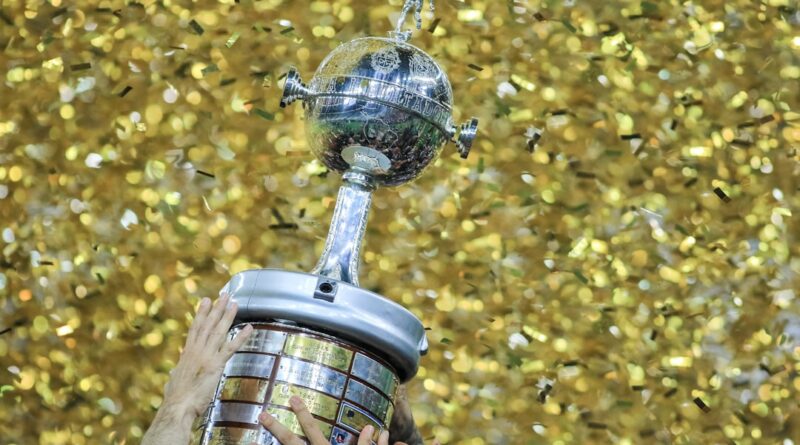
More than seventy thousand people were inside MetLife Stadium, with the leaders of fellow hosts Canada and Mexico among them. US President Donald Trump joined FIFA president Gianni Infantino to present the medals and the trophy, and both were booed by sections of the crowd during the ceremony. Rodri lifted the World Cup shortly afterwards, and the noise that followed drowned everything else out.
What it means for both nations

For Spain, this is confirmation of something that has been building for two years. They are European champions and now world champions, with a squad young enough to stay at the top for a long time. Lamine Yamal is eighteen. Pau Cubarsi is a teenager. Rodri is in his prime. If any side is equipped to arrive at the 2030 centenary World Cup as favourites, it is this one.
For Argentina, this is the end of a golden era rather than a disaster. They arrived as world champions, having also won the Copa America in 2021 and 2024, and they leave having reached a final that almost nobody expected them to reach given the injuries and the age of their key men. What follows now is a rebuild without the greatest player their country has ever produced. That is a daunting thought, and the mourning will take a while.
You can relive the entire road to the final on our World Cup 2026 bracket, revisit the last four on the semi-finals guide, and read about every side that made a run on our team profiles page. Official match data is available on FIFA’s site.
Frequently asked questions
Did Spain win the World Cup 2026? Yes. Spain beat Argentina 1-0 after extra time at MetLife Stadium on July 19, 2026, to claim their second World Cup.
Who scored the winning goal? Ferran Torres, a second-half substitute, scored in the 106th minute with his left foot from eight yards.
Why did Argentina play with ten men? Enzo Fernandez was sent off for a second bookable offence in stoppage time at the end of normal time, after a late challenge on Pau Cubarsi.
How many saves did Emiliano Martinez make? Eleven, a record for a World Cup final, beating the previous mark of eight.
Was this Messi’s last World Cup? It is widely expected to be. At 39, Messi finished the tournament with eight goals and the Silver Ball, and left the field in tears after the final.
Who performed at the World Cup 2026 halftime show? Madonna, Shakira, BTS, Justin Bieber and Burna Boy, in a show curated by Coldplay’s Chris Martin. It was the first halftime show in World Cup final history.
Byline: WorldCupWatch Football Desk, WorldCupWatch.live · Published July 20, 2026 · Result, statistics and awards verified against FIFA, Yahoo Sports, CBC, Forbes and CNBC.
World Cup 2026 collectible
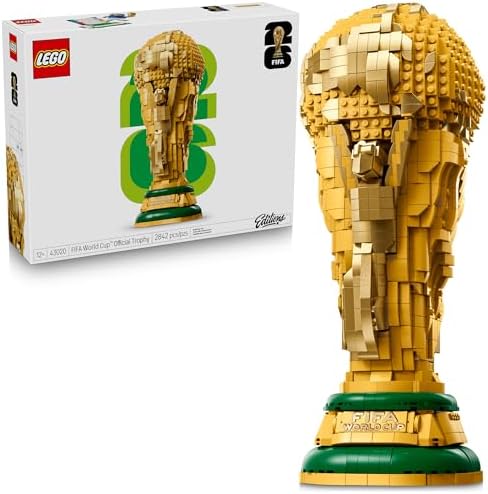
- BUILDING TOY FOR SOCCER FANS – The LEGO Editions FIFA World Cup Official Trophy (43020) building set for boys, girls, an…
- AUTHENTIC DETAILS – This collectible model features 2 stylized human figures holding up the Earth, plus the iconic globe…
- HIDDEN COMPARTMENT – The top globe opens to reveal a FIFA World Cup 2026 branded minifigure holding a mini trophy and a …
As an Amazon Associate, WorldCupWatch earns from qualifying purchases.
Official match source
FIFA’s official final report records Spain’s 1–0 extra-time win over Argentina, with Ferran Torres scoring in the 106th minute. Use the report to check the result and decisive goal.
Related Football coverage
Football news and guides
Browse competition coverage, club stories and the Football article directory.
FIFA World Cup 2026 guide
Start with the tournament format, then follow the standings, scorers and knockout references.