World Cup 2026 Final: Spain Beat Argentina to Become World Champions
Spain are champions of the world. In a tense, gripping World Cup 2026 final at MetLife Stadium, Luis de la Fuente’s side finally broke down a stubborn Argentina in the second half of extra time, with substitute Ferran Torres firing home the only goal of the game in the 106th minute to seal a 1-0 victory. It is Spain’s second world title and their first since 2010, and it came at the expense of the defending champions and of Lionel Messi, who was left in tears at the end of what is almost certainly his last World Cup. Here is the full story of the final, the awards, the numbers and how a month of football came to its conclusion in New Jersey.
Last updated: July 20, 2026.
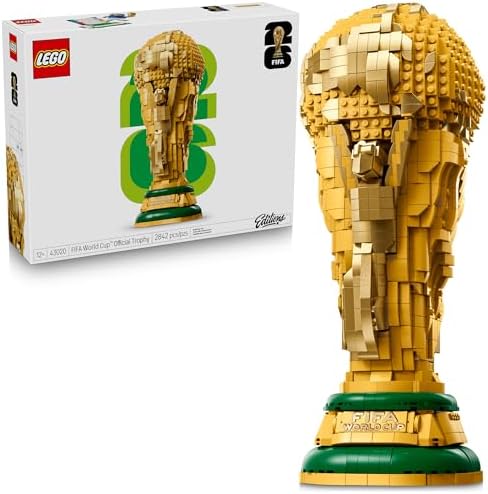
- BUILDING TOY FOR SOCCER FANS – The LEGO Editions FIFA World Cup Official Trophy (43020) building set for boys, girls, an…
- AUTHENTIC DETAILS – This collectible model features 2 stylized human figures holding up the Earth, plus the iconic globe…
- HIDDEN COMPARTMENT – The top globe opens to reveal a FIFA World Cup 2026 branded minifigure holding a mini trophy and a …
World Cup 2026 final result
| Result | Spain 1-0 Argentina (after extra time) |
| Scorer | Ferran Torres, 106′ |
| Date | Sunday, July 19, 2026 |
| Venue | MetLife Stadium, East Rutherford, New Jersey |
| Attendance | More than 70,000 |
| Red card | Enzo Fernandez (Argentina), 90+3′ |
| Fixture | Match 104, the final |
How the World Cup 2026 final unfolded
For 105 minutes, this was a final defined by resistance. Spain arrived as the most complete side in the tournament and played like it, dominating possession, pinning Argentina back and pouring forward in waves. Argentina, so used to finding a way in the closing minutes of tight games, simply could not get out of their own half.
The statistics tell a brutal story. Spain had 60 per cent of the ball and mustered 20 attempts on goal, 12 of them on target. Argentina managed two shots in the entire 120 minutes, and not one of them tested the goalkeeper. Their first attempt did not arrive until the second half of extra time. Spain’s expected goals figure climbed close to two, while Argentina’s barely registered.
Yet for the longest time, none of it counted. Spain thought they had broken through when Nico Williams turned the ball into the net, only for the goal to be chalked off after a foul on Nicolas Otamendi in the build-up. Chance after chance came and went. The longer the game stayed goalless, the more Argentina began to believe, because this is a team that has spent the entire tournament winning games in the last ten minutes.
Then came the moment that changed everything. Deep into stoppage time at the end of normal time, Enzo Fernandez flew into a late challenge that sent Pau Cubarsi tumbling, and the referee showed him a second yellow card. Argentina, already stretched, would have to play the whole of extra time with ten men.
They held on through the first period. But 39 seconds into the second half of extra time, the dam finally burst. The ball dropped to Ferran Torres eight yards out, and the substitute thumped it past Emiliano Martinez to send the Spanish supporters into delirium. Torres thought he had added a second moments later on the counter, racing clear and beating Martinez again, but the flag went up for the narrowest of offsides, a shoulder ahead of the last defender.
Argentina, to their credit, refused to lie down. In the closing minutes they produced two rare moments of threat, but it was too little, too late. The whistle went, Spain’s players collapsed into each other, and tempers briefly flared before Lionel Scaloni stepped in to separate the sides. La Roja were world champions again.
Ferran Torres, the unlikely hero

There is something fitting about a substitute deciding a final that had refused to break for nearly two hours. Ferran Torres came off the bench and needed barely half a minute of the final period to write his name into Spanish football history.
Speaking afterwards, Torres said it felt as though it was meant to happen, that it was destined to be the winning goal. For a player who has spent much of his international career in and out of the side, it is the kind of moment that defines a lifetime. Spain’s squad depth has been one of the quiet stories of this tournament, and in the biggest game of all, it was a man from the bench who delivered.
Emiliano Martinez’s record-breaking night
If Spain deserve enormous credit, so does the goalkeeper who almost single-handedly kept Argentina in the final. Emiliano Martinez was extraordinary, producing save after save as Spain laid siege to his goal. By the end he had made 11 saves, obliterating the previous record of eight for a World Cup final.
It was a performance of enormous courage and concentration, and on another night it would have carried Argentina to a shootout and perhaps to the trophy. Instead, Martinez was left to watch Torres celebrate a goal he could do nothing about. Football can be cruel like that.
The red card that turned the final
Enzo Fernandez had already scored one of the goals of the tournament in the semi-final win over England, so his dismissal in the final was a bitter twist. Having been booked earlier, his late lunge on Cubarsi in stoppage time left the referee with little choice, and Argentina were reduced to ten men for the entire 30 minutes of extra time.
Playing a man short against a Spain side that controls possession as well as any team in the world was always going to be close to impossible. Argentina defended heroically for 15 minutes, but the extra man told in the end. It was the decisive moment of a game short on clear turning points.
Messi’s farewell ends in heartbreak
The image that will endure from this final is Lionel Messi in tears. At 39, in what everyone expects to be his final World Cup, he could not summon one last piece of magic. Spain crowded him out, denied him space and made sure the ball rarely reached him in dangerous areas.
There is a haunting symmetry to it. Messi may well have played his last match for Argentina at MetLife Stadium, the same ground where he announced his retirement from international football back in 2016 after losing a Copa America final. He returned then and went on to lift the World Cup in 2022. This time, there will probably be no comeback.
He leaves the tournament with eight goals, having briefly held the all-time World Cup scoring record before Kylian Mbappe reclaimed it in the third-place play-off, and having dragged Argentina through comeback after comeback. Defeat in the final does nothing to diminish a career that stands alongside any in the history of the sport. You can follow his tournament in full on our Golden Boot page.
Spain’s second star and a special generation
For Spain, this completes a remarkable double. Having won the European Championship, they have now conquered world football too, 16 years after their only previous World Cup triumph. Members of the victorious 2010 squad were in the stands to watch it happen.
De la Fuente’s team have been the most convincing side in the tournament from start to finish. They conceded just twice across seven matches, kept clean sheet after clean sheet, and combined suffocating control with the fearless attacking of teenager Lamine Yamal. Captain Rodri lifted the trophy, presented on the night by US President Donald Trump alongside FIFA president Gianni Infantino.
For Argentina, it is the end of an era. They had been chasing a first back-to-back World Cup since Brazil in 1962, and a fourth consecutive major tournament after the Copa America wins of 2021 and 2024 and the World Cup of 2022. They came up one game short.
The World Cup 2026 awards
Spain dominated the individual honours, but the Golden Boot went elsewhere in dramatic fashion.
| Award | Winner |
|---|---|
| Golden Boot | Kylian Mbappe (France), 10 goals, 4 assists |
| Silver Boot | Lionel Messi (Argentina), 8 goals, 4 assists |
| Golden Ball | Rodri (Spain) |
| Silver Ball | Lionel Messi (Argentina) |
| Bronze Ball | Kylian Mbappe (France) |
| Golden Glove | Unai Simon (Spain) |
Kylian Mbappe becomes the first player in history to win the World Cup Golden Boot twice, having also claimed it in 2022. He and Messi went into the closing weekend level on eight goals, but Mbappe struck twice in the third-place play-off to reach ten and leave Messi needing a hat-trick in the final to catch him. Spain never gave him the chance. Mbappe’s 22 career World Cup goals are now the most in the tournament’s history.
Rodri took the Golden Ball as the outstanding player of the tournament, edging out Messi, who settled for the Silver Ball. Goalkeeper Unai Simon claimed the Golden Glove after finishing with seven clean sheets, two more than the previous record for a single World Cup.
Third-place play-off: England 6-4 France
The day before the final produced one of the wildest games of the entire tournament. England beat France 6-4 in a ten-goal thriller in Miami, racing into a 4-0 lead by half-time before France staged a furious comeback after the break.
Bukayo Saka was the star, scoring twice in the first half and completing his hat-trick from the penalty spot to become only the fourth England player ever to score a treble at a World Cup. France refused to go quietly, with Mbappe scoring twice in the rally that took him to the Golden Boot, but England held on for the bronze medal.
The first halftime show in World Cup history
The final also broke new ground off the pitch. For the first time, a World Cup final featured a halftime show, with Madonna, Justin Bieber, Shakira, BTS and the Muppets all performing. It divided opinion, as expected, with some enjoying the spectacle and others feeling it borrowed too heavily from American sporting traditions. What is beyond doubt is that it drew an enormous global audience.
How the tournament unfolded

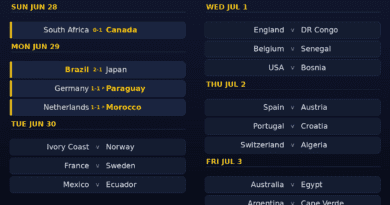
The first 48-team World Cup delivered exactly the chaos and drama the expanded format promised. Across 104 matches and 39 days, starting on June 11, we saw Germany and the Netherlands both knocked out on penalties in the new Round of 32, all three host nations eliminated in the Round of 16, Brazil dumped out by Erling Haaland’s Norway, and Cristiano Ronaldo’s World Cup career come to an end. The semi-finals were the first in history to feature the top four ranked teams in the world.
You can relive every result on our World Cup 2026 bracket, revisit the last four on our semi-finals guide, and read about all the contenders on our team profiles page. Official statistics and match data are on FIFA’s site.
What comes next
Attention now turns to 2030, when the World Cup celebrates its centenary. Spain will begin that tournament as reigning champions, and a new generation led by Lamine Yamal will fancy their chances of defending the trophy. For Messi, Ronaldo and several of the greats who said goodbye this summer, the World Cup story is over. For everyone else, the wait begins again.
Frequently asked questions
Who won the World Cup 2026?
Spain. They beat Argentina 1-0 after extra time in the final at MetLife Stadium on July 19, 2026.
What was the World Cup 2026 final score?
Spain 1-0 Argentina, with Ferran Torres scoring in the 106th minute of extra time.
Who scored in the World Cup 2026 final?
Ferran Torres, coming off the bench, scored the only goal 39 seconds into the second half of extra time.
Why did Argentina play with ten men?
Enzo Fernandez was sent off in stoppage time at the end of normal time for a second bookable offence after a late challenge on Pau Cubarsi.
Who won the Golden Boot at the World Cup 2026?
Kylian Mbappe, with 10 goals, becoming the first player to win the award twice.
How many World Cups have Spain won?
Two. Spain won in 2010 and again in 2026.
Who won the third-place play-off?
England beat France 6-4 in Miami, with Bukayo Saka scoring a hat-trick.
Byline: WorldCupWatch Football Desk, WorldCupWatch.live. Result, stats and awards verified against FIFA, ESPN, Yahoo Sports and Al Jazeera.
More World Cup 2026 coverage
- Quarter-final results: two extra-time thrillers in the last eight.
- Round of 16 recap: the round the hosts fell.
- Round of 32 results and the biggest early shocks.
- Final group tables for all 48 teams.
- Where to watch, country by country.
Related Football coverage
Football news and guides
Browse competition coverage, club stories and the Football article directory.
FIFA World Cup 2026 guide
Start with the tournament format, then follow the standings, scorers and knockout references.