
ICC Rankings Explained: Team Ratings, Player Rankings and Points Tables
ICC rankings answer a different question from a tournament points table. A ranking rates teams or players within a cricket format. A competition table records progress in a particular event or championship. Before comparing two numbers, check that they describe the same format, subject and date.
Reference review: 13 October 2026. This guide links the official ranking resources and explains how to read them. It does not reproduce an unverified current top ten or describe an old ranking article as today’s table.
Choose the correct official ICC ranking
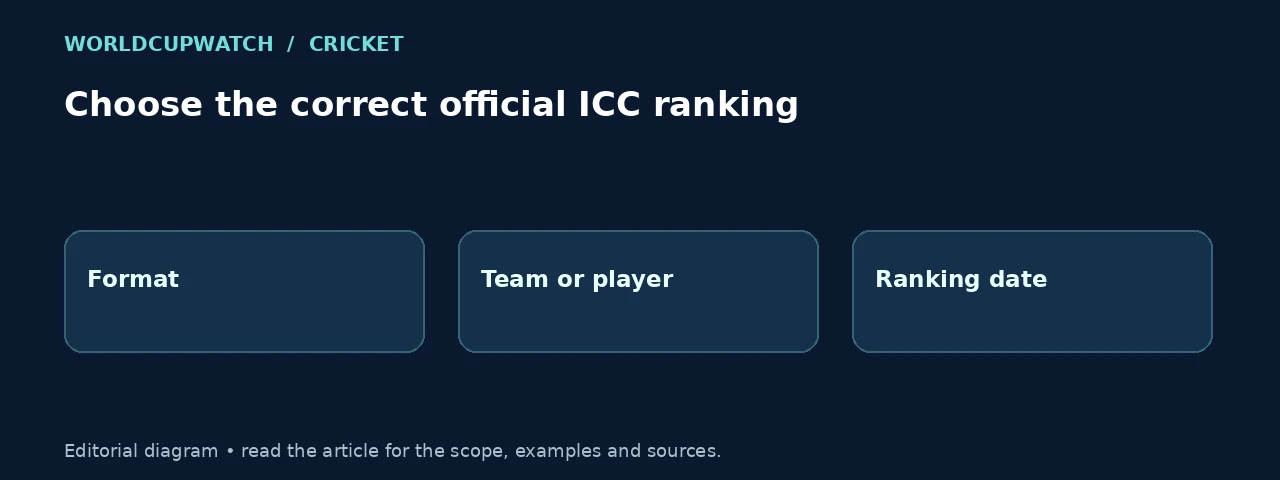
The ICC publishes separate team tables for men’s Tests, ODIs and T20Is, as well as women’s ODI and T20I team rankings. Player tables are also separated by format and discipline. Being first in T20I batting does not make a player first in Test batting or in all-rounder rankings.
Start with the ICC rankings directory. For team tables, the official men’s Test, men’s ODI and men’s T20I resources identify the format explicitly.
Record the ranking date when citing a position. A team number from a previous month can remain widely shared after a new update, and a player headline can refer to a particular discipline. A clear note says “men’s ODI team ranking at the stated update,” not simply “best cricket team.”
If you are comparing India and Pakistan, choose the same format and update for both. Comparing one side’s T20I rating with the other’s ODI rating creates a number-to-number comparison without a common meaning. Apply the same discipline when comparing a batter and an all-rounder.
Team points, ratings and positions
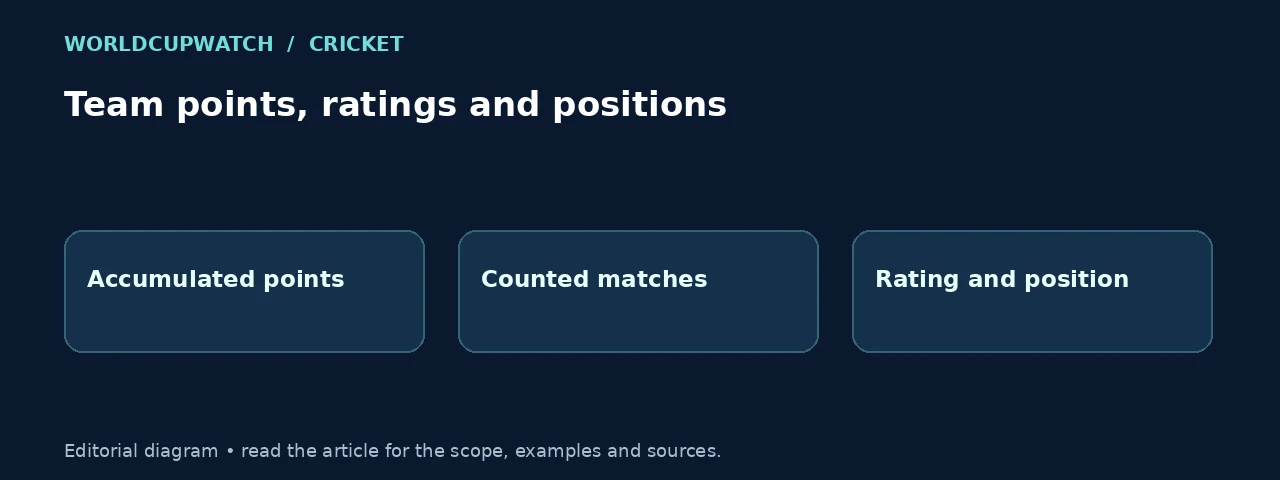
The ranking position is the team’s order in the table. The rating is the numeric measure used to produce that order. The accumulated points and matches columns help explain the rating calculation; they are not interchangeable with the competition points awarded for winning a group match.
The ICC’s ranking explanation describes a framework that accounts for results and opposition strength, with eligible matches weighted over the relevant period. Its broad methodology explanation is background, while current positions belong to the latest official table.
For a hypothetical arithmetic exercise, 2,400 ranking points across twenty counted match units would produce a rating of 120 by simple division. The figures do not identify an actual team, and the real framework’s weighting and format-specific provisions need to be applied before treating a total as official.
A large raw points total does not necessarily indicate the highest rating. Imagine another hypothetical side with 1,860 points across fifteen counted units: its average is 124. It has fewer raw points but a higher average. The table labels tell you whether you are looking at an accumulation or a rating.
Do not interpret a rating as a win probability. A rating of 120 is not a 120 percent chance of victory, and a ten-point gap does not automatically translate into a specific match margin. Form, availability, venue and format can all matter in an actual contest.
Player rankings and performance comparisons
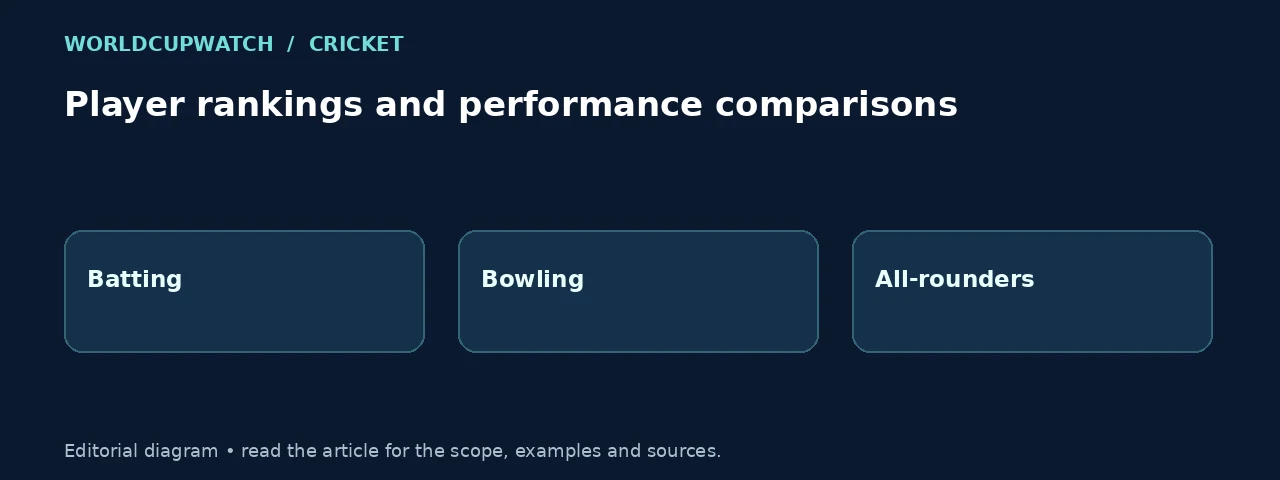
Player rankings organize batting, bowling and all-round performance within the relevant format. A ranking position is not the same as a career runs total, a tournament’s leading-scorer list or a transfer-market valuation. Those measures can all be useful, but they describe different things.
When reading a headline about a player moving up, check the category and the comparison date. A rise in ODI bowling can follow an ODI series without implying a change in T20I batting. The player may have participated in both formats during a tour, but the records remain distinct.
Use sample size and role when discussing a performance. A batter’s short attacking innings and another’s long anchor innings can contribute differently to a match. A ranking can provide context, while the actual scorecard explains the event you are reporting. Avoid claiming that one rating number fully describes a player’s usefulness in every situation.
For readers learning cricket statistics, our rules guide explains batting strike rate, bowling economy and scorecards. Those everyday statistics are a good starting point before interpreting a broader rating system.
Rankings, World Cup qualification and WTC standings
Some competitions use an ICC ranking at a specified cut-off as part of their qualification process. The cut-off date matters. A team’s position after that date is not automatically substituted for the position that governed the qualification gate.
Our Cricket World Cup 2027 resource explains the announced ODI qualification route and the separate Qualifier and Super Series stages. Qualification is an event-specific use of rankings; it does not turn every ranking table into a list of guaranteed finalists.
The World Test Championship table uses the percentage of championship points earned. It is separate from ICC Test ratings. A WTC series can influence both the championship record and the broader Test ranking, but the two calculations and purposes remain different.
NRR is another distinct measure. Our net run rate guide concerns limited-overs competition tie-breakers, not the calculation of a team’s ICC rating. A rain-adjusted chase also has its own DLS requirement.
Questions and related reading
Which team is number one now? Use the official table for the specific format and its latest update. This page does not supply an unverified live position.
Can a team lead ODI rankings and sit lower in T20Is? Yes. They are separate formats and ranking tables.
Are the points in a team ranking the points in a World Cup group? No. Check the table heading and the competition before interpreting the column.
Can an older ICC explainer verify today’s order? It can explain the methodology, but current positions require current ranking evidence.
- WTC points table explained provides the PCT formula and original worked examples.
- Cricket World Cup 2027 connects the event’s cut-off, qualification and tournament stages.
- India schedule and Pakistan schedule help distinguish the upcoming ODI, T20I and Test programmes.
- Cricket hub brings our current reports and reference guides together.
Sources: ICC rankings directory, ICC team-rating calculation background, and the official format tables linked above. Our Editorial Policy sets the correction standard; use the contact page to flag a dated or mislabeled ranking reference.