

Cricket
WORLDCUPWATCH · CRICKET
Cricket
From the international game to T20 leagues. Explore news, fixtures, tournament guides and the stories behind the score.
Explore cricket

Find your next story by competition, match or topic.
Your cricket guidebook

Cricket World Cup 2027
Dates, hosts and format for the next men’s ODI World Cup.
Pakistan cricket schedule
October–November 2026 home fixtures, listed by match and venue.
Pakistan vs Sri Lanka tickets
Announced T20I prices, sale dates and official booking information.
Latest cricket


India vs Australia: Records, World Cup Memories and Next Match
Read article →: India vs Australia: Records, World Cup Memories and Next MatchIndia vs Australia head-to-head records, every World Cup result, unforgettable matches, leading player stats and the 2027 Test and World Cup schedule.

Pakistan vs England: Records, World Cup Memories and Next Match
Read article →: Pakistan vs England: Records, World Cup Memories and Next MatchPakistan vs England head-to-head records, World Cup results, unforgettable matches, top player stats and upcoming fixtures, with a clear match prediction.
Pakistan vs Australia: Records, Heroes and Unforgettable Matches
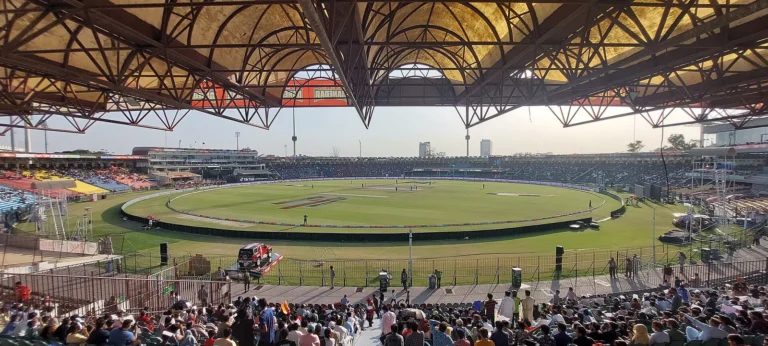
Read article →: Pakistan vs Australia: Records, Heroes and Unforgettable MatchesPakistan vs Australia head-to-head records, World Cup results, greatest matches and key players, from Wahab’s Adelaide spell to the 2027 fixture.

India vs Pakistan: Head-to-Head, Heroes and Unforgettable Matches
Read article →: India vs Pakistan: Head-to-Head, Heroes and Unforgettable MatchesThe India–Pakistan matches fans still replay, from Miandad’s last-ball six to Amir at The Oval and Kohli at the MCG, with records,…

India vs Pakistan World Cup 2027: Date, Venue & Tickets
Read article →: India vs Pakistan World Cup 2027: Date, Venue & TicketsIndia vs Pakistan is scheduled for 10 October 2027 in Johannesburg. Check the venue, first-ball time status, PKT/IST guidance and ticket-ballot deadline.

ICC Playing Conditions October 2026: What Viewers Need to Know
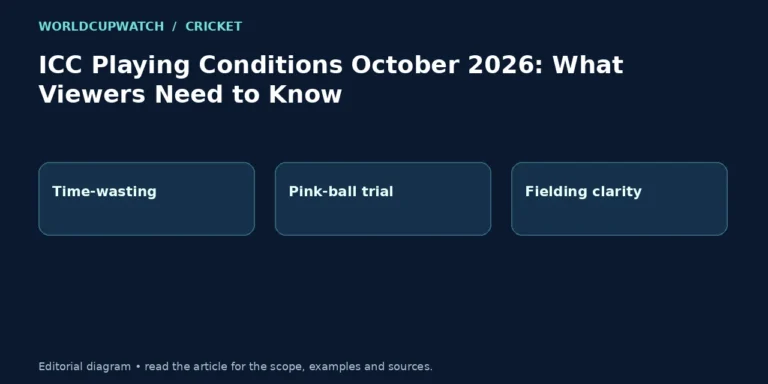
Read article →: ICC Playing Conditions October 2026: What Viewers Need to KnowICC playing conditions from October 2026: batter time-wasting, the pink-ball trial, fielding clarifications and which series use the changes.
Cricket, with sources you can check

Read how the Cricket Desk approaches sourcing, updates and corrections in our Editorial Policy.
Cricket is easier to follow when you know three things: the format, the stage of the competition and what the score is measuring. This guide connects our cricket news, tournament coverage and worked examples for readers in Pakistan, India and beyond. Guide reviewed 9 October 2026. Use the links to jump from a quick answer to the relevant detailed resource.
Cricket guide: choose the answer you need
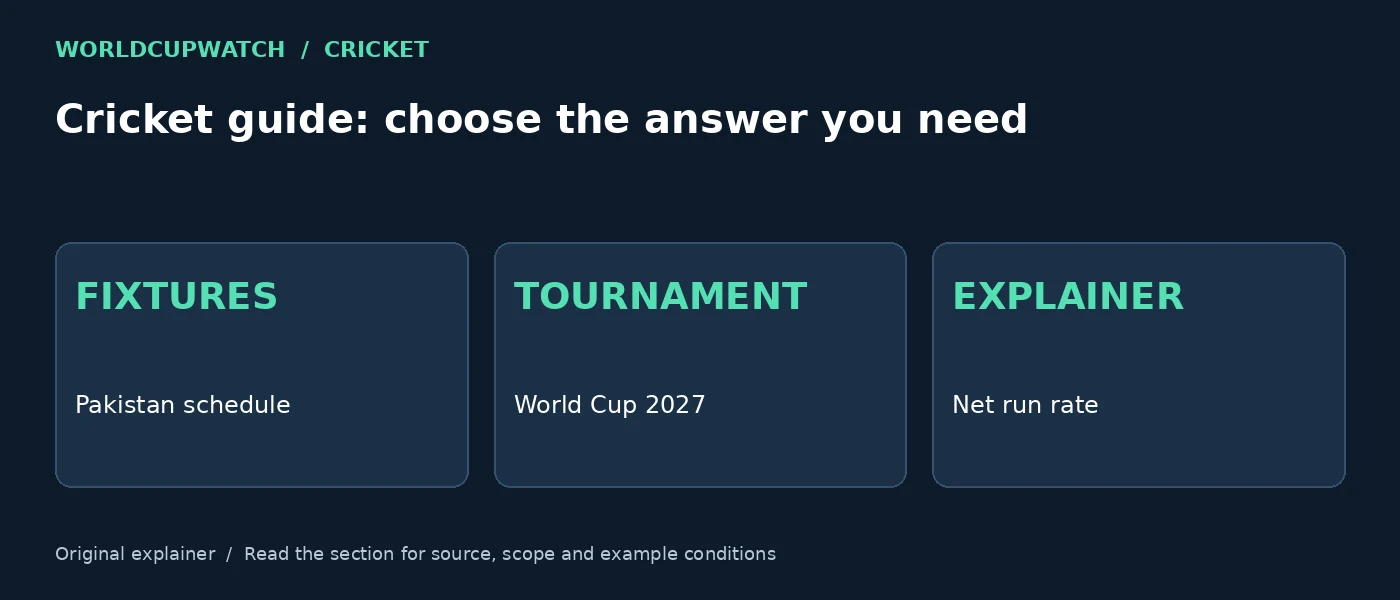
Start with the question you actually have. If you want to know when Pakistan plays, open the Pakistan cricket schedule. If you want to understand the next men’s ODI World Cup, use the Cricket World Cup 2027 guide. If a table’s NRR column is confusing, the net run rate calculation guide works through the numbers. Each page has a specific job, so you can find an answer without reading unrelated match reports.
For breaking developments, begin with Cricket News. For an explanation of a completed match, choose Results and Reports. A preview belongs before the game: it describes the expected contest and the information available at that time. A report belongs afterwards: it should explain the verified result and how the game developed. The date helps you tell those reading situations apart.
You can also follow a simple learning route through this page: formats, scorecards, run rates, phases, competition tables and qualification. That order puts a familiar television score into context before introducing the wider tournament. Someone following their first match can stop after the scorecard section; someone comparing contenders can continue to the discussion of roles and evidence. Both are useful ways to enjoy the same sport.
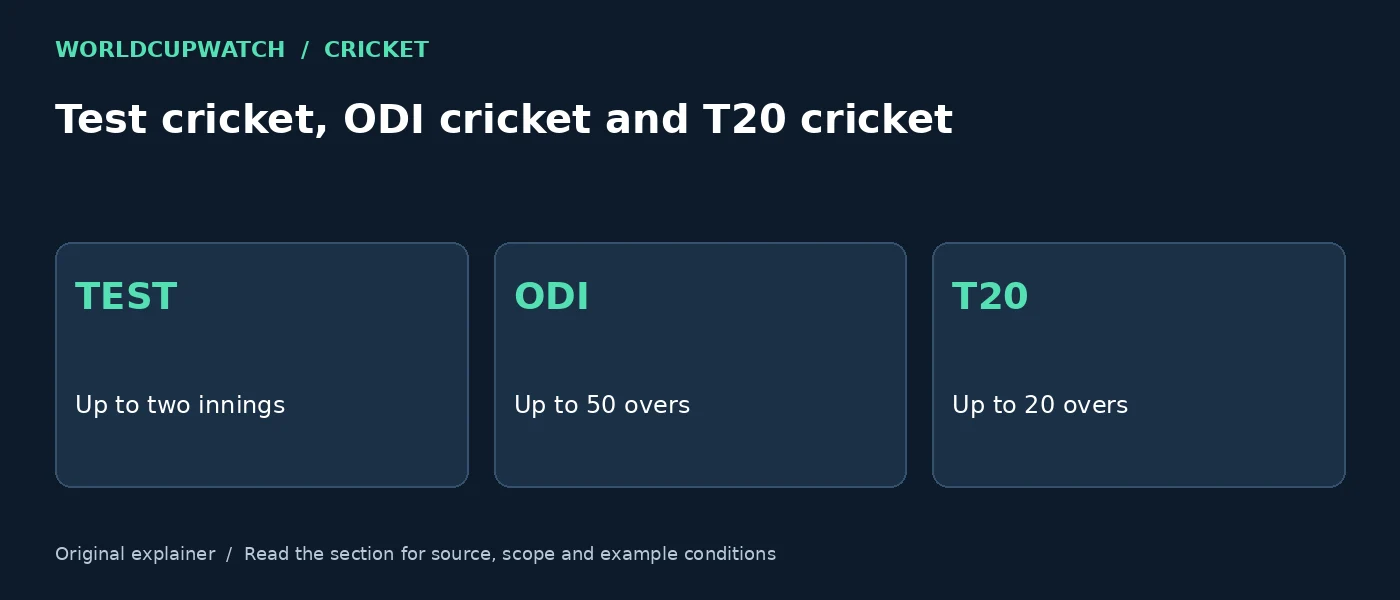
Test cricket, ODI cricket and T20 cricket
| Format | Conventional innings allowance | Reading priority |
|---|---|---|
| Test | Up to two innings per side | Sessions, wickets and time |
| ODI | One innings of up to 50 overs | Resources and scoring pace |
| T20 | One innings of up to 20 overs | Remaining balls and required rate |
International cricket has three main formats. A conventional Test is scheduled across five days, with up to two innings for each side. An ODI normally allows one innings of up to 50 overs per side, and a T20 international one of up to 20. The ICC formats overview explains their identities. A format name tells you the type of contest; a tournament name tells you which competition it belongs to.
Those differences change how you interpret a score. A passage of careful batting can be valuable when a Test side is trying to survive a difficult session. In a limited-overs chase, the remaining deliveries put a more immediate constraint on the task. A boundary has the same basic appeal to a supporter, but its strategic value depends on the match situation. Compare like with like before deciding that a player has been unusually aggressive or slow.
Do not infer the men’s ODI team’s strength directly from a T20 result. Players, selections and responsibilities can differ. Even a cricketer who appears in both teams may be asked to play a different role. When you read a prediction, look for evidence from the relevant format rather than a general impression based on the most recent television game.
For fixture planning, record the format alongside the teams. A listing that says only Pakistan versus Sri Lanka may leave you looking for the wrong programme. Our national schedule separates the T20Is, ODIs and Tests, while the 2027 tournament hub concentrates on the men’s ODI event.
How to read a cricket scorecard
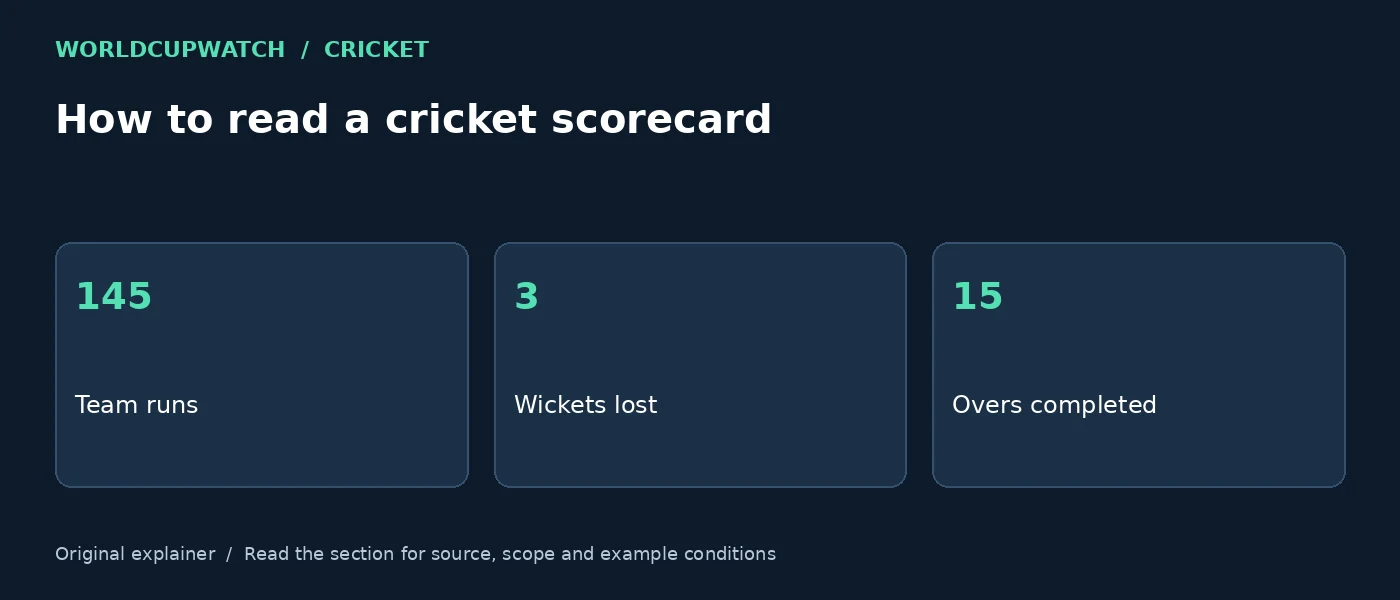
A score such as 145/3 means 145 team runs with three wickets lost. The number of overs tells you how much of the innings has been completed. On a full scorecard, the batter’s runs and balls faced are separate from the team total; extras can contribute to the latter. The ICC playing conditions directory is the reference point for the applicable rules. A brief score graphic is a summary, while the full scorecard explains its components.
Here is an original reading example. Team Blue is 145/3 after 15 overs in an uninterrupted 20-over innings. You know its total, wickets lost and completed overs. You do not yet know which batter is on strike, whether the next bowler has overs remaining, or how the surface has played. Those missing details matter when you try to forecast a finishing score. Avoid treating the scoreboard as a complete account of the contest.
A bowling line also needs several fields. Runs conceded alone can make a bowler who delivered a full spell look worse than someone who bowled briefly. Read overs, runs and wickets together, then consider the phase in which those overs were delivered. The figures describe what happened; the opposition and match situation help explain how difficult the assignment was.
When a report and a scorecard appear to disagree, compare the same innings and the same update time. A live headline may have been written before the innings finished. For a completed report, the final scorecard should establish the numbers, while the article supplies a readable account of the important passages.
Overs notation, balls and a common calculation mistake
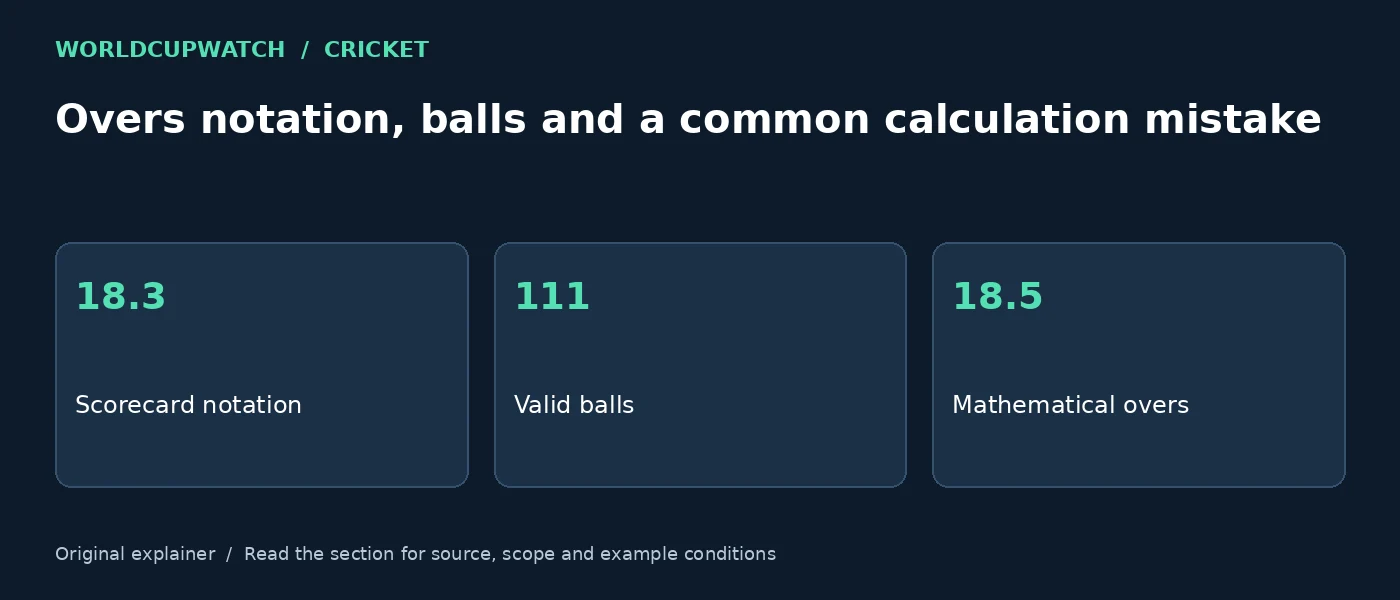
Cricket overs notation records complete overs and additional valid deliveries. It is not an ordinary decimal. In six-ball cricket, 18.3 means 18 complete overs plus three valid balls: 111 balls in total. For arithmetic, that is 18.5 overs. Our NRR worked examples show why this distinction changes a calculation.
Imagine a hypothetical chase that finishes at 161 after 18.3 overs. Dividing 161 by the displayed number 18.3 produces the wrong scoring rate. Convert to balls first, then calculate 161 multiplied by six and divided by 111. That gives approximately 8.703 runs per over. You do not need to perform the calculation during every game, but the method explains the figure shown by an accurate score service.
When adding innings, add valid balls before converting back. An innings of 10.4 and another of 8.4 contain 64 and 52 balls, for a combined 116 balls. That is 19 complete overs and two balls in scorecard notation, or approximately 19.333 mathematical overs. Adding the displayed values as decimals would hide the carry into another complete over.
This is also a useful check when a spreadsheet appears to disagree with a broadcast table. Ask whether the input is scorecard notation or a mathematical number of overs. Keep that label with the column. Wides and no-balls can add deliveries that do not count towards the six valid balls, so a delivery count taken from a highlights clip is not a substitute for the official innings record.
Run rate, required rate and what a chase demands
Run rate is a scoring pace. Required run rate is the pace needed to complete a particular chase within the remaining overs. They describe different quantities. One summarises what has happened; the other describes the task ahead. Neither, by itself, gives the probability that a team will win. Wickets, available batters and the remaining bowling resources change how realistic a required pace may be.
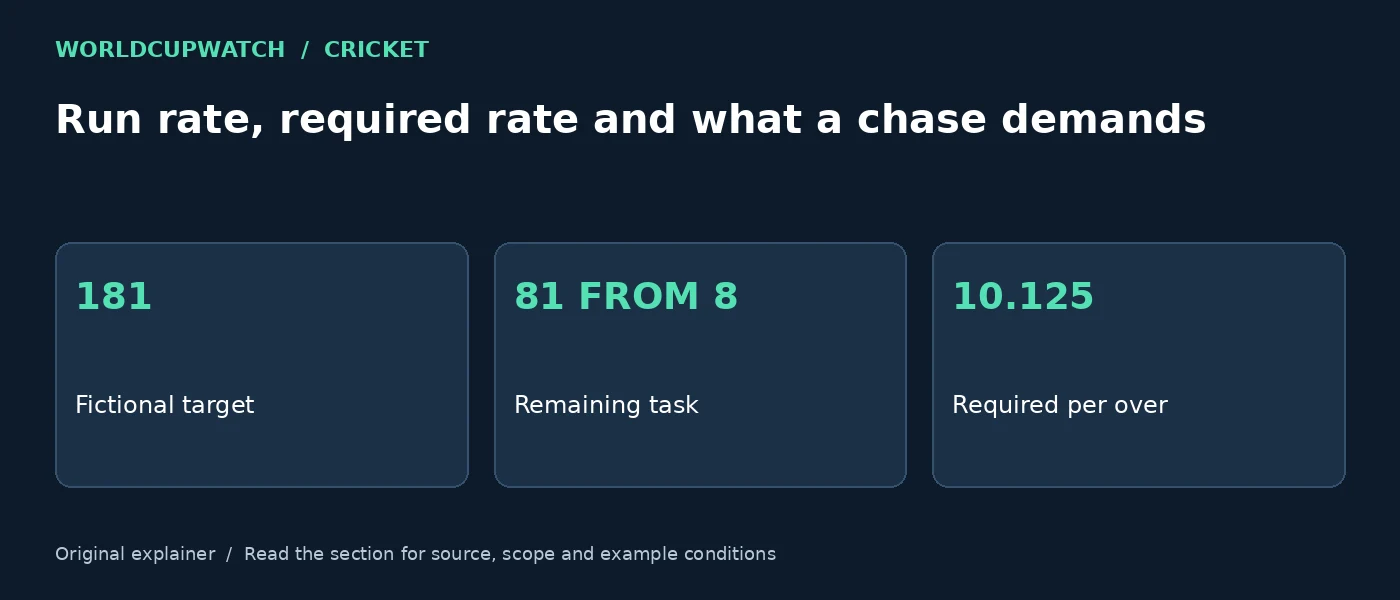
Suppose a fictional team is chasing 181 and reaches 100 after 12 of its 20 overs. It needs another 81 from eight overs, so the required rate is 10.125 per over. Its current rate is 100 divided by 12, approximately 8.333. The gap tells you that the chase needs acceleration. It does not tell you that the chase is lost: the innings may have preserved wickets and held back attacking batters for the finish.
Now imagine two wickets falling quickly without many runs being added. The required rate may change only modestly, while the options for meeting it become much narrower. That is why a report should describe both the arithmetic and the personnel. A partnership can make a target manageable by keeping those options available; a wicket can shift the burden onto a batter with a different task.
For an interrupted innings, use the official revised target and overs allowance before doing this arithmetic. Keep the original target as historical context, rather than continuing to calculate against it after the conditions have changed. The DLS section below explains why a simple proportional reduction is insufficient.
Batting partnerships and the balance between pace and risk
A partnership is the runs added while a particular pair bats together. It can steady an innings, accelerate a chase or preserve a chance of saving a Test. The headline total is useful, but the timing and situation give it meaning. A fast fifty-run stand at the end of an innings answers a different problem from fifty patient runs after early wickets.
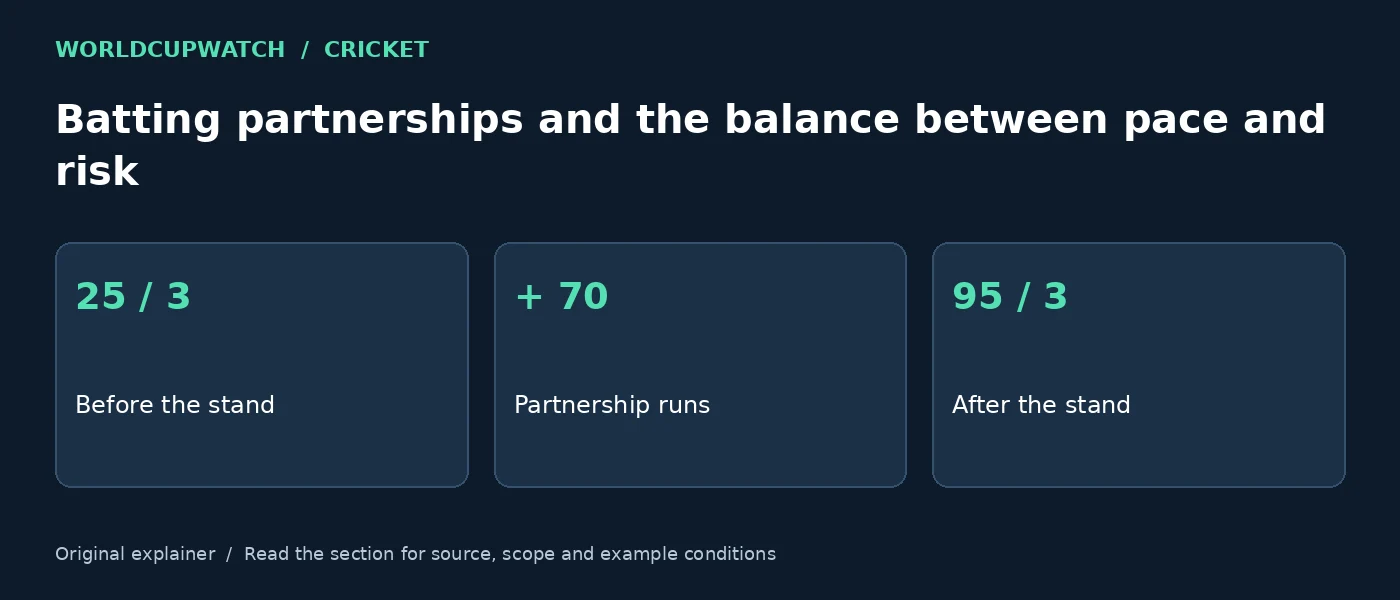
Consider a fictional chase in which the score is 25/3. Two batters add 70, making it 95/3. The stand has changed both the total and the team’s available resources: no further wicket fell during that partnership. To assess it, examine the deliveries used and the remaining target. Calling it successful solely because it reached seventy would leave out whether the required rate became too difficult.
Batters can share the work without playing identical innings. One may find boundaries while the other rotates strike, or they may change roles when a particular bowler comes on. A clear report should describe the observed passage rather than assigning permanent labels based on reputation. If the evidence available is only the scorecard, explain what those figures establish and avoid inventing conversations or tactical instructions.
For supporters, a useful question is what the partnership allowed the next batter to do. Did it leave enough time for an attacking finish? Did it expose the lower order early? Did it absorb difficult conditions? Those questions move analysis beyond a list of totals, while keeping the distinction between recorded figures and our interpretation clear.
Bowling spells, economy and wicket-taking roles
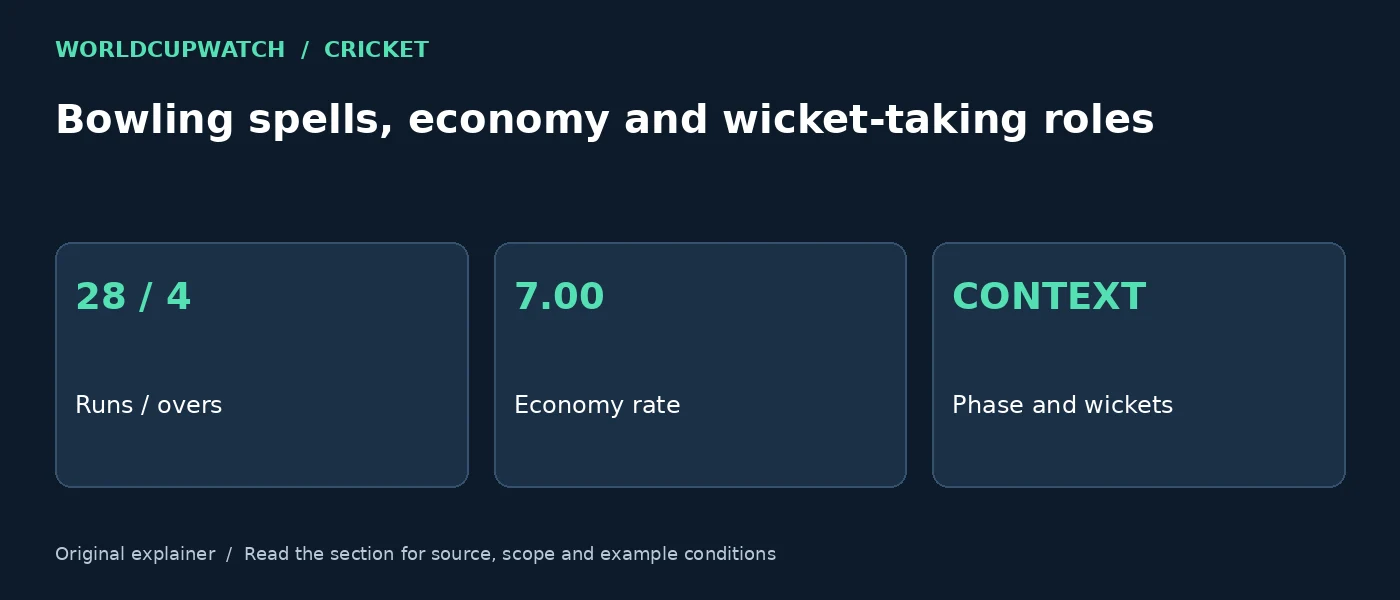
Economy measures runs conceded per over. It is useful, but a complete bowling assessment needs more than the smallest number in that column. Opening the bowling, controlling the middle overs and delivering the final overs can present different challenges. A team’s plan may also depend on using one bowler against a specific batter or retaining a particular skill for later.
Take a fictional four-over spell costing 28 runs. Its economy is seven runs per over. A two-over spell costing 14 has the same economy, although it covers half as much work. The figures are comparable as rates, but the workload and phases still matter. Add wickets and match context before ranking the spells. A wicket that breaks a threatening partnership may have an effect beyond the immediate score change.
Bowling partnerships can matter too. Pressure from one end can make a batter take a risk at the other. A report should be careful about attributing that explanation: the sequence can support an editorial reading, but it does not prove the bowler’s private intention. Use language that connects the visible events instead of claiming access to a team meeting.
When comparing across formats, retain the format label and sample size. A short T20 spell and a long Test spell demand different forms of consistency. A striking single-game economy does not establish sustained form across a season. For a tournament preview, recent performances against relevant opponents are more useful than one isolated figure selected because it supports a favourite team’s case.
Powerplays, field settings and match phases

A powerplay restricts field placement during a specified part of a limited-overs innings. It changes the spaces available to batters and the choices available to the fielding captain. The exact restrictions and their duration come from the applicable playing conditions, including adjustments for shortened games. Use the ICC document for the format and effective date rather than borrowing a domestic league’s rule.
For a spectator, the useful idea is that the same delivery can present a different scoring opportunity against a different field. A batter may choose to attack an open area or rotate strike towards a preferred matchup. The bowler then has to deliver a plan compatible with the field. Look at the placement and the delivery together before deciding whether a shot or a bowling change was surprising.
The familiar terms opening overs, middle overs and death overs describe phases, but their boundaries depend on the format and the discussion. An ODI innings offers more time to recover from a quiet passage than a T20 innings. A report should identify the actual overs it discusses instead of treating a phase label as a statistic.
As a reading exercise, compare the runs and wickets in consecutive blocks of an innings. Then ask which bowlers and batters were involved. A change in scoring pace can arise from personnel, field placement or conditions; the score alone cannot select one explanation. Our Previews and Predictions category is the place for that match context when it is supported by current information.
Pitch, weather and the limits of a venue stereotype

Venue history can suggest questions worth asking, but it does not settle how a particular match will play. The prepared surface, recent weather and match-day conditions can differ from a memorable previous game. A description such as batting-friendly should be supported by relevant evidence and a date. It should not become a permanent property attached to every fixture at the ground.
When reading a preview, ask how the conditions would affect specific roles. Movement early in an innings may challenge an opening pair. A slowing surface may affect the pace at which the middle order can rotate strike. A wet outfield may change practical decisions about play. These are analytical possibilities; the report after the match should establish what was actually observed.
Be especially cautious with precise claims about dew or rain. A forecast can change, and an expected condition does not prove that the toss decided the contest. A team still has to execute its batting, bowling and fielding. The useful preview gives a conditional explanation: if a relevant condition materialises, this is the area of the matchup to watch.
For a long tournament, avoid transferring one ground’s character to all host venues. Our 2027 hub separates the host countries and venue labels so readers can follow the actual fixture. Travel and conditions belong beside the match information; they should not be used as a shortcut to a guaranteed winner. Keep the final result separate from any earlier weather-based expectation.
Points tables and net run rate
A points table describes a competition stage. Read matches played, results and points together before looking at the tie-break column. Different numbers of completed games can make a mid-event table misleading if you compare only the order of teams. The applicable regulations determine the points allocation and the sequence of tie-breakers. Do not assume a rule from one tournament applies to another.
NRR compares the eligible scoring rate with the eligible conceding rate. It is not an average of match margins and it is not a win percentage. Our net run rate guide explains the formula, all-out adjustment and tournament totals using original examples. That page owns the detailed arithmetic; this hub helps you decide when you need it.
Suppose two fictional teams both have two wins, but one has completed four games and the other three. They have different remaining opportunities. A supporter assessing qualification should therefore record the games left and the progression rule as well as the current points. A side can move in the table because another match finishes, even without playing itself that day.
When a competition moves to another round, establish whether points or NRR carry forward. Keep archived group standings separately labelled rather than overwriting them with later-round figures. A useful table should tell you its stage and update date. That makes it easier to connect a news story about a result with the actual change to a team’s route through the event.
Qualification: entry, advancement and the final field

Qualification can refer to several different achievements. A team may enter a qualifying competition, earn participation in a World Cup or advance from an opening stage into the main groups. A headline that uses the word qualified needs to tell you which step it means. Reaching one gate does not necessarily complete the whole journey.
The Cricket World Cup 2027 qualification section distinguishes those routes for the announced ODI tournament. Use that event-specific explanation for the format rather than applying an older World Cup structure. This general hub introduces the distinction without reproducing the whole tournament guide or assigning a remaining placeholder to a popular team.
The current USA League 2 news report provides a practical example. The title and the place in the next qualifying event are separate from confirmation of a World Cup group berth. Read the confirmed achievement first, then identify what remains. That keeps a genuine success meaningful without overstating it.
For your own tracker, keep four fields: completed competition, entry status, next required stage and the source date. A strong recent match can inform an assessment of prospects, but it cannot replace the regulation or result that awards a place. This distinction also matters for fixture pages: a slot described by a qualifier label remains conditional until the official process supplies the entrant.
World Cup cricket and other international competitions
World Cup cricket is not one interchangeable event. The men’s ODI competition, the men’s T20 tournament and the corresponding women’s events need their full names and editions. The formats affect squad roles and the way a match develops. The edition establishes the dates, entry route and tournament regulations. A short headline on social media may omit both pieces of information.
Our 2027 ODI World Cup hub is the main resource for that event. It covers the announced route, team guidance, tickets and an explicitly provisional favourites assessment. If you arrive from a search about a different World Cup, check the opening description before relying on its schedule. The same national team can be involved in several competitions across a busy year.
International series also have their own sporting purpose. A bilateral series determines its own results, while a match may additionally contribute to a wider championship when the regulations say so. A tour can contain several formats without using one combined standings table. Our International Series coverage and Pakistan schedule identify those format boundaries.
A useful way to follow several events is to keep the competition name in every saved fixture. Include the teams, format, city and source-check date. That prevents an old T20 preview from being used to explain an upcoming ODI or a women’s result from being accidentally attached to the men’s calendar. It also gives a future correction a precise place to start.
T20 leagues: following PSL, IPL and franchise teams

Franchise cricket brings different team identities and competition structures. A player can represent one national side internationally and another named team in a league. When reading a roster or report, identify the competition and season before drawing a conclusion about selection. A franchise lineup does not establish a national squad, and an international absence does not by itself explain a league contract.
Use T20 Leagues for season-specific coverage as it is published. A useful league resource should give the actual season, stage and update date. An archived points table should remain recognisable as an archive. During the off-season, explanations of the rules or team-building process can still be useful without being advertised as live standings.
For tables, the NRR arithmetic in our guide supplies a foundation, but the competition’s own rules determine how it is applied. Confirm the allocation of points, any stage reset and the progression route. Do not assume that finishing in the same numerical position gives a team the same opportunity in two different leagues.
When analysing a player, separate the role from the reputation. A batter’s task for a franchise may differ from the one assigned internationally, while availability can change the roster across a season. The strongest comparison uses a relevant sample and an explained context. It is more helpful than importing a familiar international ranking and treating it as a complete forecast of a domestic tournament.
Who is favourite? A useful way to evaluate a prediction
A favourite is an assessment made before an outcome, not a promise. To evaluate the assessment, look for evidence in the relevant format, current availability, the balance of roles and the conditions expected for the specific event. A forecast should explain what would change it. The name of a famous player is a starting point for discussion, not a complete model of a team’s chances.
Our 2027 hub has an early favourites assessment, clearly identified as editorial analysis. Confirmed squads and later ODI evidence will matter to its review. This general guide does not turn that provisional shortlist into a ranking for every match, and it does not assign unsupported percentages to countries.
Try comparing two hypothetical sides by roles. One may have strong opening batting but little evidence about its lower-order recovery. Another may have dependable bowling but limited experience chasing large targets. Ask which uncertainty the venue and opponent are likely to test. This makes the prediction explainable even if readers disagree with its conclusion.
After the game, compare the forecast’s assumptions with what happened. A correct winner prediction can come from weak reasoning, and a sound assessment can be overtaken by an unusual performance. The useful review identifies the changed evidence instead of simply celebrating a correct guess. Keep the date and scope of an older prediction visible when linking it from a completed report.
Pakistan and India: fixtures, clocks and watching access
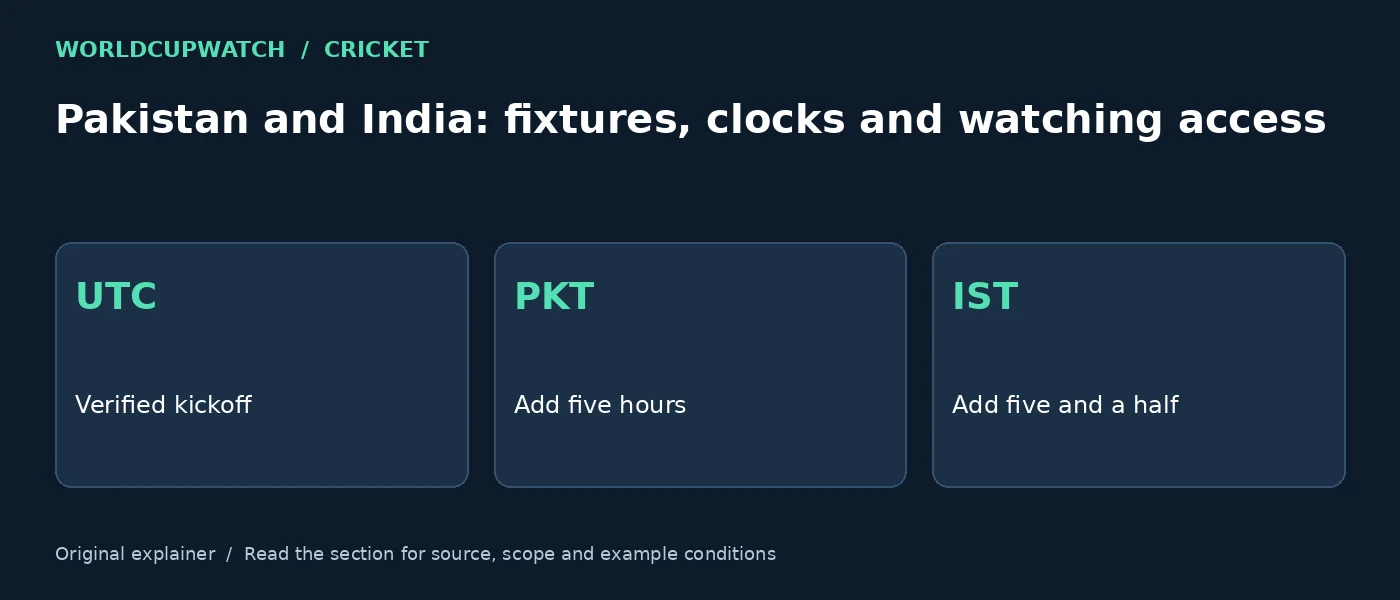
| Viewer location | Standard time | Illustrative 19:00 UTC start |
|---|---|---|
| Pakistan | UTC+5 | 00:00 PKT, following day |
| India | UTC+5:30 | 00:30 IST, following day |
| UAE | UTC+4 | 23:00 GST, same day |
Pakistan Standard Time is UTC+5, while India Standard Time is UTC+5:30. Once a match’s original start time is verified, India is thirty minutes ahead of Pakistan. UAE time is one hour behind PKT. These fixed offsets make conversion straightforward, but only after you have the actual announced time and its original zone. A ticket-sale time is a different event.
As an original example, a hypothetical 7:00 pm PKT start converts to 7:30 pm in India and 6:00 pm in the UAE. This is a clock exercise, not a time announced for a fixture on this site. Near midnight, conversion can change the date, so save the day and the timezone with the hour. Readers travelling between countries should check the clock on the device used for reminders.
For Pakistan fixtures, use the national schedule and inspect its first-ball status. For an event staged elsewhere, record the host-local information before converting. The World Cup hub gives the relevant PKT and IST guidance for its host countries. Do not copy a previous year’s start time simply because the ground and opponent sound familiar.
Broadcast access is also territorial. A service available in one country may carry a different programme or entitlement in another. Confirm the event, match and current access terms together before subscribing. A clips account on X can provide a legitimate short highlight without establishing that the same account or service offers a complete live match.
Tickets and planning a day at the ground
Start with the exact fixture: competition, teams, date and venue. Then compare the announced enclosure, available seats and total for your group. A published price describes the announcement; it does not guarantee that the same seats remain available when you book. Ticket delivery, collection and entry procedures need their own check before you plan when to arrive.
Our Pakistan versus Sri Lanka T20I ticket guide covers a specific announced programme. A ticket for one match does not establish access to a later ODI or Test. Read the competition label on the booking, especially where a tour contains several formats and cities. Check current seller instructions rather than applying a previous visit’s arrangements automatically.
For a tournament using a ballot, entering the ballot and holding a purchased ticket are different stages. Our 2027 hub explains the announced ballot procedure. Use the latest official event terms to establish the current next step. A registration confirmation alone should not be treated as permission to enter the ground.
Keep practical planning separate from a prediction about who will advance. A future knockout slot may remain conditional even when a schedule mentions a seed or group position. Decide how much flexibility you need before arranging travel. A clear match identity and a confirmed booking are more useful for that decision than a confident forecast on social media.
Rain interruptions, DLS and changed targets
DLS is the method used to adjust a limited-overs contest when time is lost. Its purpose is to account for the resources available to the two innings, rather than simply scale a total by the fraction of overs left. The ICC DLS resource provides the official methodology and explanatory documents. Use the announced target and allocation for the resumed game.
Two innings with the same runs and completed overs can have different wicket situations. That is why an equal reduction in time does not necessarily create an equal practical task. The revised chase needs the officially calculated target; a spectator’s average-rate shortcut cannot supply it. Our simple required-rate arithmetic can then describe the revised task, once those official inputs are known.
A par score and a winning target also answer different questions. Read the label shown by the match officials or score service. When a game ends during an interruption, the result procedure differs from watching a chase resume towards a displayed target. Keep the stage of the interruption and the official outcome with the numbers when writing or checking a report.
NRR after a DLS result can require adjustments under the competition’s conditions. The NRR guide’s rain section uses a specified ICC event as its example. It explains the relationship without claiming to reproduce the official DLS calculation or apply every tournament’s regulations from one generic table.
Cricket news, player comments and original X references
In an ICC statement published on 1 October 2026, Sourav Ganguly explained the purpose of the playing-condition changes. This short excerpt is attributed to that statement:
“Playing Conditions continue to reflect the needs of the modern game”
Sourav Ganguly, ICC statement, 1 October 2026 — original statement
A useful news story tells you what changed, when it happened and why it matters. A result, a squad announcement and a player’s opinion are different developments. Read the original source date as well as the date of our report. Older comments can supply background, provided the article does not present them as an immediate reaction to a new event.
For player and commentator references on X, the original status identifies the statement. Check the account identity, surrounding context and publication date. A screenshot can omit all three, while a repost can give the statement a different framing. A commentator’s preference is an attributed assessment; an official selection needs the relevant announcement. A social post about ambition does not guarantee a future appearance.
The USA qualification report shows how a current result can be connected to the wider tournament without inventing a reaction. The 2027 hub separately labels its older player references as background. That separation helps returning readers identify the development instead of mistaking a familiar quote for fresh news.
Rules also change. ICC’s 1 October 2026 playing-conditions announcement specifies an effective-date boundary for new series. If a report discusses a rule incident, establish the applicable series and document first. A newly published regulation should not be applied retrospectively to a game played under an earlier edition.
Cricket statistics, records and meaningful comparisons
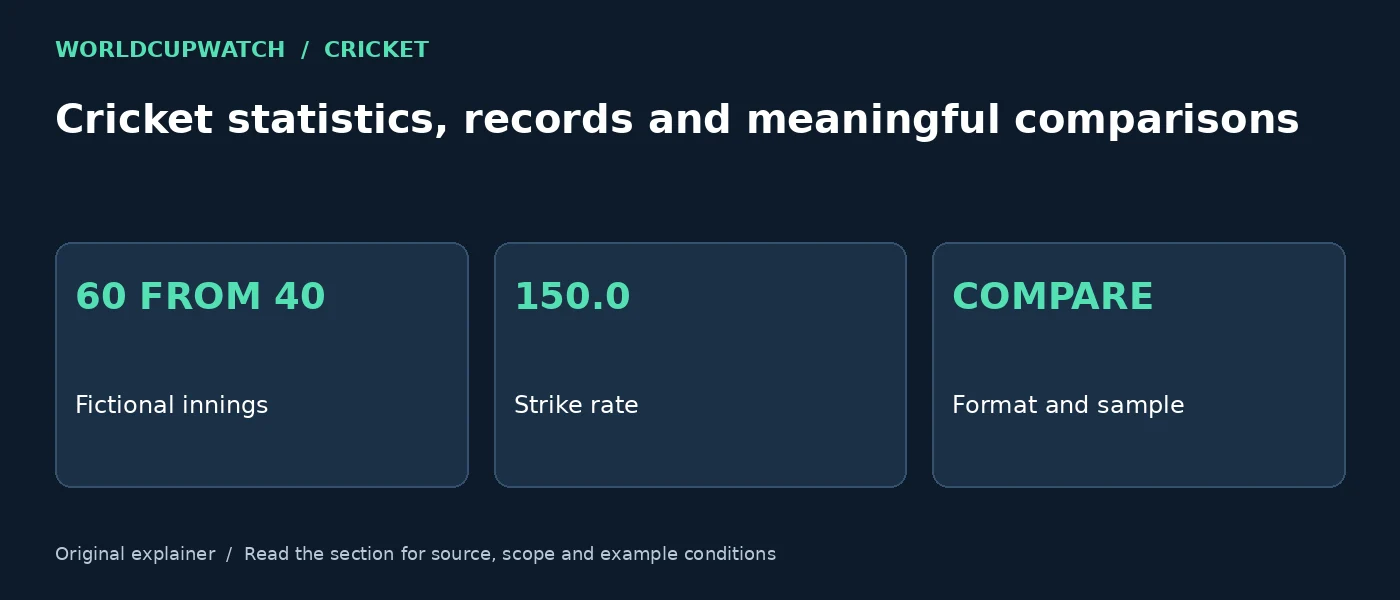
A cricket record needs a defined scope. Men’s or women’s cricket, international or domestic matches, the format and the period can all change the claim. A milestone within one tournament is different from a career record. The Stats and Records category is intended for those defined comparisons as supporting coverage develops.
Read the denominator with a rate. Batting strike rate, batting average and runs per innings describe different things, while a bowling rate needs its overs and sample. A player’s cumulative total can rise because they had more opportunities, so compare matches or innings played as well as the headline number. The full scorecard supplies context that a leaderboard may omit.
As an original example, 60 from 40 balls gives a batting strike rate of 150. A separate innings of 30 from 15 gives 200. The second is faster as a rate, while the first contributes more runs. Neither figure, without the match situation, establishes which innings helped its team more. This is a small example of why a single statistic cannot answer every performance question.
For records articles, an update should identify what actually changed and retain the scope. For supporters, the best follow-up question is what the number tells you about the role, opposition and opportunity. That approach makes statistics useful for understanding the sport instead of turning every strong performance into an undefined claim that it was the greatest ever.
Your next cricket read and the editorial desk
For a complete tournament route, go to Cricket World Cup 2027. For national-team planning, use the Pakistan schedule. For numerical work, open the NRR examples. For new developments, return to Cricket News. These paths connect the broad guide with pages that answer narrower questions.
The WorldCupWatch Cricket Desk explains our editorial responsibility. Announced facts, attributed comments and our own analysis should remain distinguishable. The original diagrams in this guide illustrate the concepts alongside the written explanations. Their examples are identified as hypothetical rather than being presented as scorecards from a real match.
If a fixture, statistic or rule reference needs a correction, send the specific page and the supporting ICC announcement or original X post through Contact Us. A precise source and date help establish which claim changed. The Editorial Policy explains the wider approach to sourcing, corrections and AI-assisted work.
You do not have to master every term before following a match. Begin with the format, total, wickets and remaining task. Add the phases and the competition route as your interest grows. The purpose of this hub is to make that next step easy, whether you are checking a Pakistan fixture, following India at a World Cup or trying to understand a close chase.
Related cricket articles
India vs Australia: records, World Cup memories and next match — From Sharjah and Kolkata to the Gabba and Ahmedabad, with every men’s World Cup result, player records and the 2027 schedule.
Pakistan vs England: records, World Cup memories and the next match — From Wasim’s 1992 final to Stokes at Melbourne, explore the rivalry’s greatest turns, player records and announced fixtures.
Pakistan vs Australia: records, heroes and unforgettable matches — Relive Wahab’s Adelaide spell, Hussey and Wade’s dramatic finishes, Pakistan’s greatest replies, and the records behind the next World Cup meeting.

Cricket World Cup 2027 guide — Qualification, the published format, Pakistan and India reading routes, and dated ticket announcements for the next men’s ODI event.
Net run rate calculation — Original arithmetic examples explain overs notation, early chases, all-out innings and tournament totals.
USA win League 2 — The 7 October 2026 result and its qualification consequence: a Qualifier place is different from a final World Cup berth.
Pakistan cricket schedule — Published opponents, formats and dates, with a clear separation between fixtures and unverified start times.
Pakistan vs Sri Lanka ticket guide — A dated series guide covering the announced ticket window and the information supporters need to check.
Have a question about this guide or a specific correction? Use the comment form below. Include the section and the source date so the Cricket Desk can check the detail.
More related coverage, added 13 October 2026.
- Cricket rules explained — Runs, wickets, extras, formats and original scorecard walkthroughs.
- DLS method explained — Par scores, winning targets and the interpretation of an interrupted chase.
- India cricket schedule — Verified senior men’s fixtures, host-local dates and separate format programmes.
- WTC points table explained — PCT, deductions and qualification, with clearly labeled arithmetic examples.
- ICC rankings explained — Separate team ratings, player rankings and competition tables.
- Pakistan’s second-T20I win — The confirmed 11 October result, Maaz Sadaqat’s 96 and the 2–0 series position.
- New Zealand’s split India ODI squads — The announced personnel changes between the first three and final two ODIs.
- October ICC playing conditions — Which series use the changes and how viewers should interpret them.