Pakistan vs England: Records, World Cup Memories and Next Match
Updated 19 October 2026 · WorldCupWatch Editorial Desk
Mention Melbourne to a Pakistan supporter and ask which final comes to mind. The answer might begin with Wasim Akram running in, or with Ben Stokes refusing to leave. Same opponent. Same ground. Two World Cups, thirty years apart, with the celebrations belonging to different dressing rooms.
That is Pakistan vs England. A rivalry that can make a whole generation remember two deliveries, a captain’s push-ups, a catch followed by an injury, or a pair of spinners turning an apparently lost series into a victory. The best memories rarely fit inside the headline result.
The Pakistan vs England head-to-head favours England overall. The ODI World Cup record is level. And the next meeting is close: Pakistan face England in Rawalpindi on 20 October 2026, before meeting again in Lahore on 25 October. Pakistan arrive after a win over Sri Lanka; England arrive with a reshaped ODI squad and a recent Test-series sweep to remember.
Here are the stories worth revisiting before that first ball, followed by the records, previous results, player statistics, announced fixtures and an early assessment of the next ODI.
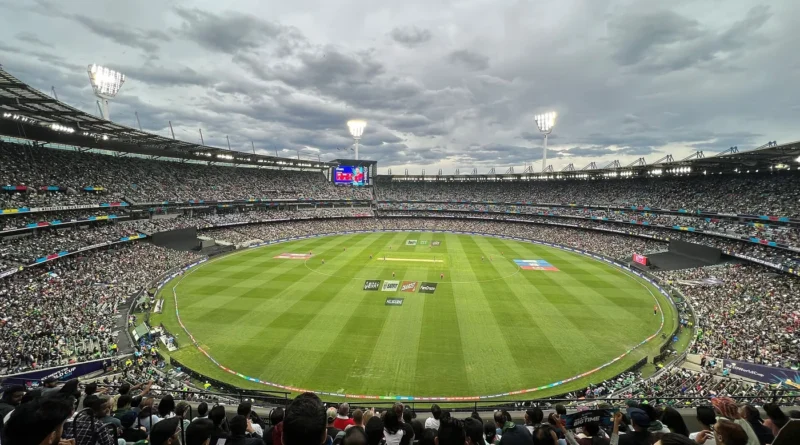
Cover: The MCG at the start of the Pakistan–England T20 World Cup final, 13 November 2022. Photo: Storm machine · CC BY-SA 4.0.
Melbourne, 1992: two deliveries that changed a World Cup final
England had already bowled Pakistan out for 74 earlier in the tournament. Rain had stopped that match becoming an England victory. Now, in the final, the same opponents stood between Pakistan and the trophy, and there would be no comfort in simply surviving the evening.
Pakistan slipped to 24 for two. Imran Khan and Javed Miandad had to rebuild before anyone could think seriously about a spectacular finish. Their 139-run partnership was patient, sometimes uncomfortable viewing if you wanted the scoreboard to hurry. Imran made 72, Miandad 58. The innings needed them to stay long enough for someone else to attack.
Inzamam-ul-Haq and Wasim supplied that attack. Inzamam made 42 from 35 balls; Wasim’s 33 came from only 18. Pakistan reached 249 for six, a total that gave their bowlers a match to work with. Recalling the feeling while batting in that final, Wasim later told the ICC:
“I was enjoying every second of it.”
Wasim Akram, recalling his batting in the 1992 final
England did not simply fold. Neil Fairbrother and Allan Lamb helped bring the chase to 141 for four, with the target still within reach. Pakistan needed a wicket before an English recovery became an English finish.
Wasim came around the wicket to Lamb. The ball moved away and hit the stumps. Lamb was gone, and the stadium had barely settled before Chris Lewis had to face the next delivery.
This one came back in. Another set of stumps disturbed. Two balls, two wickets, two entirely different problems for the batters. England were suddenly six down, and the final had a new direction.
The pleasure in watching that sequence again is knowing the second delivery is coming. Lewis does not have that luxury. The replay gives you the movement, then the reaction, then the extraordinary contrast between Wasim’s certainty and the batter’s surprise.
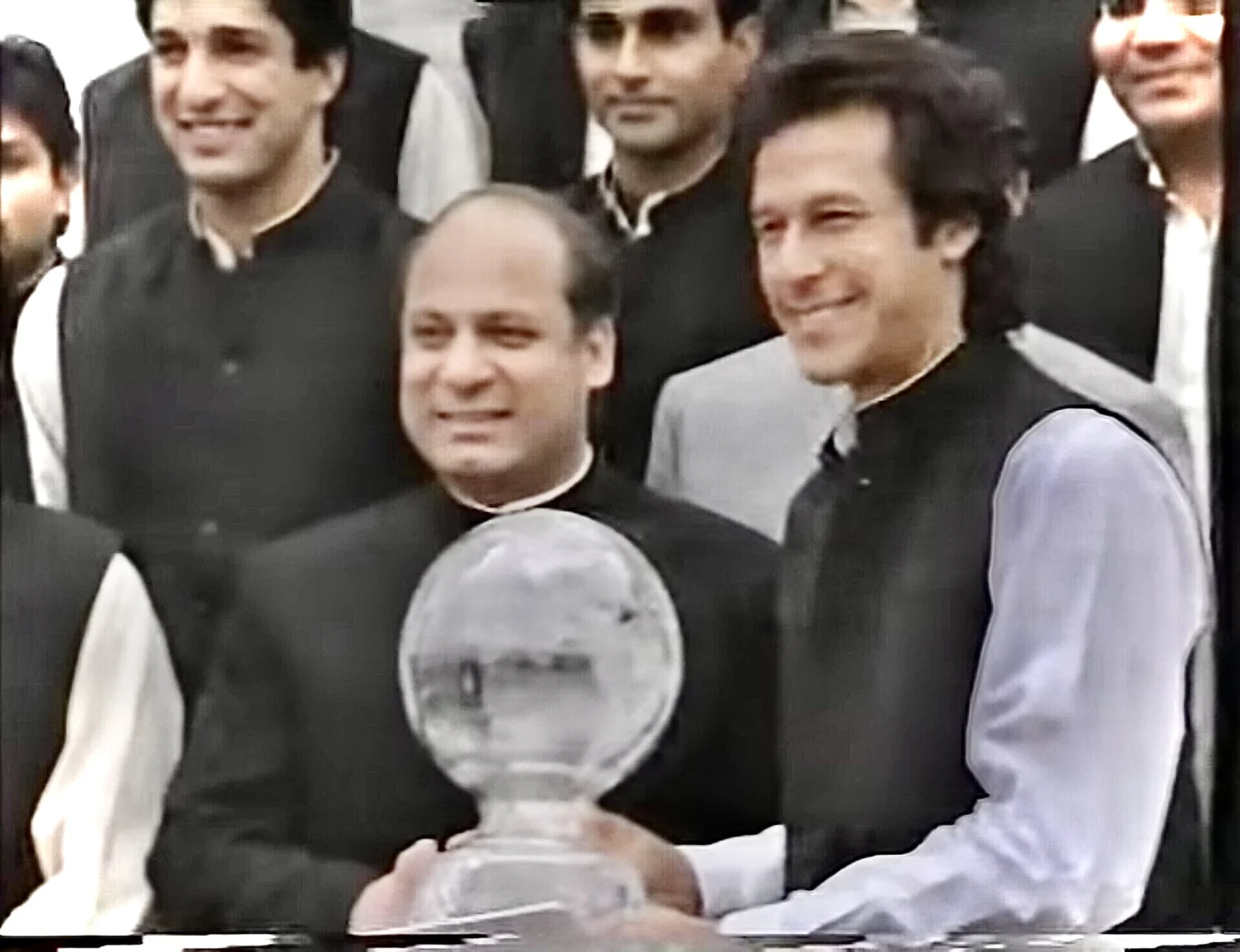
England were eventually dismissed for 227. Pakistan won by 22 runs, with Wasim taking three for 49 and Mushtaq Ahmed three for 41. The photograph above belongs to the celebrations around that 1992 trophy, a reminder that the victory continued to live far beyond the Melbourne night.
The ICC’s final recap records the contributions on both sides. For the spell itself, revisit its great World Cup moments collection. It takes only a short passage of cricket to understand why those two deliveries are still being discussed.
Melbourne, 2022: Stokes stays, Shaheen cannot
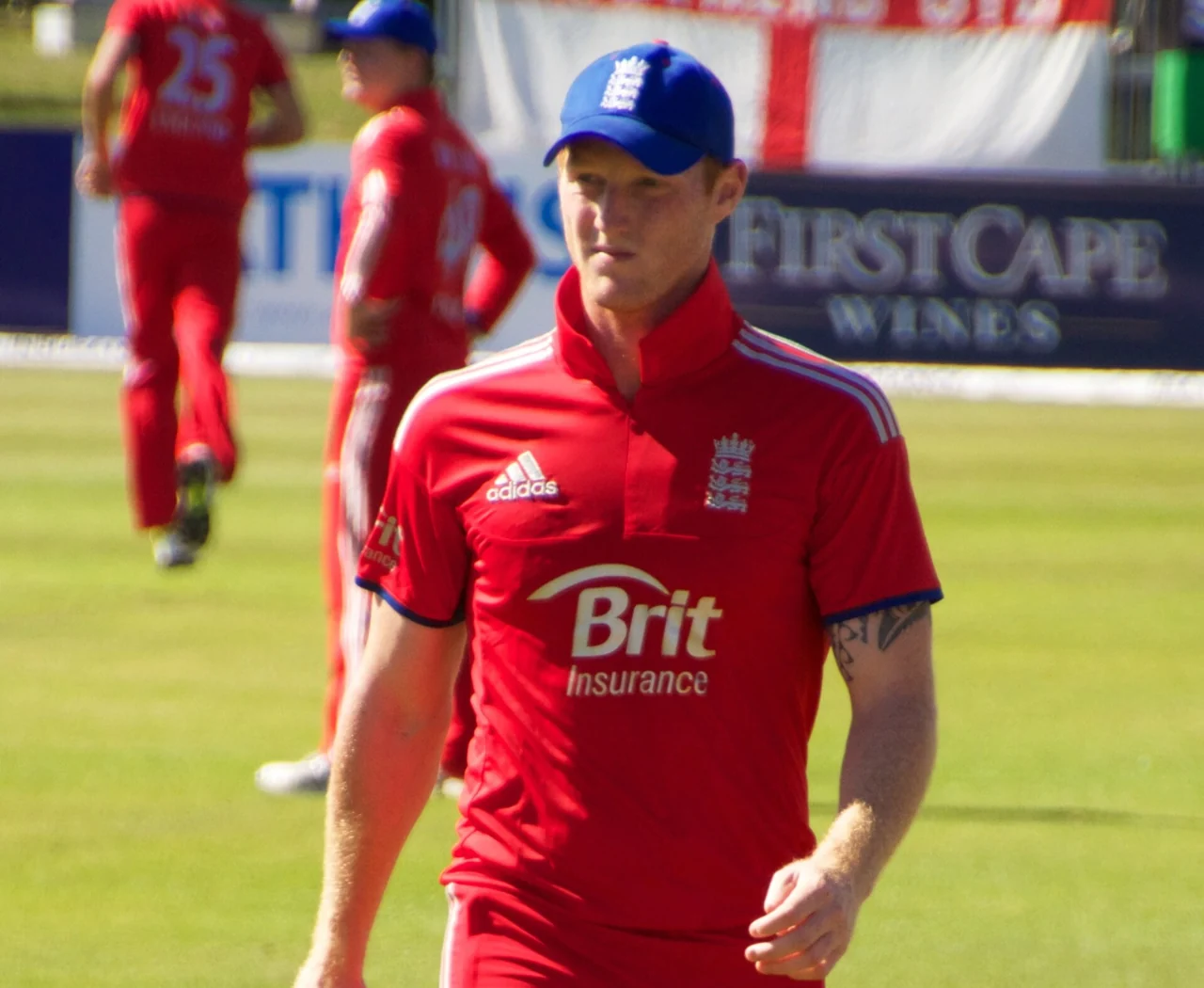
Thirty years later, Pakistan and England returned to a World Cup final at the MCG. This time it was a T20 title, Pakistan were defending 137 for eight, and the route to victory depended on making a small total feel much larger.
Shaheen Shah Afridi gave them the start they wanted. Alex Hales, so destructive in England’s semi-final, lost his stumps for one. Haris Rauf found wickets too. Naseem Shah kept asking difficult questions, even when the ball did not find an edge. England were chasing a modest target, but Pakistan had made the chase feel anything but routine.
Stokes stayed. He did not need an innings full of enormous shots; he needed to make sure England still had a batter in control when the final reached its most demanding overs. Every time Pakistan threatened to turn a good passage into a decisive one, his wicket remained unavailable.
Then came the catch that carried an unexpected cost. Shaheen held Harry Brook in the deep but hurt himself on landing. When he tried to return to the attack, he could manage only one ball of his third over before leaving the field again.
England still needed 41 from 29 deliveries when Shaheen went off. Iftikhar Ahmed completed the over, and England took the opening. Stokes and Moeen Ali moved the target closer; Stokes finished unbeaten on 52 from 49 balls as England won by five wickets with an over remaining.
For Pakistan, the injury made the ending particularly difficult to accept. It is fair to remember how fiercely their fast bowlers defended the total. It is also fair to remember why the total was only 137: Sam Curran had taken three for 12, while Adil Rashid’s two for 22 included Babar Azam. England had earned their advantage well before the chase.
Curran, named Player of the Final and Player of the Tournament, caught the feeling afterwards in four words:
“World Champions, how good!”
Sam Curran, after the 2022 T20 World Cup final
The ICC’s final report and highlights show both the pressure Pakistan created and the chase Stokes completed. Babar’s post-match reflections explain the importance Pakistan placed on Shaheen’s remaining overs.
Melbourne gave each side a different kind of hero. In 1992, Wasim changed a final in two balls. In 2022, Stokes changed it by being the batter Pakistan could not remove.
Cardiff, 2017: the favourites run into Hasan Ali
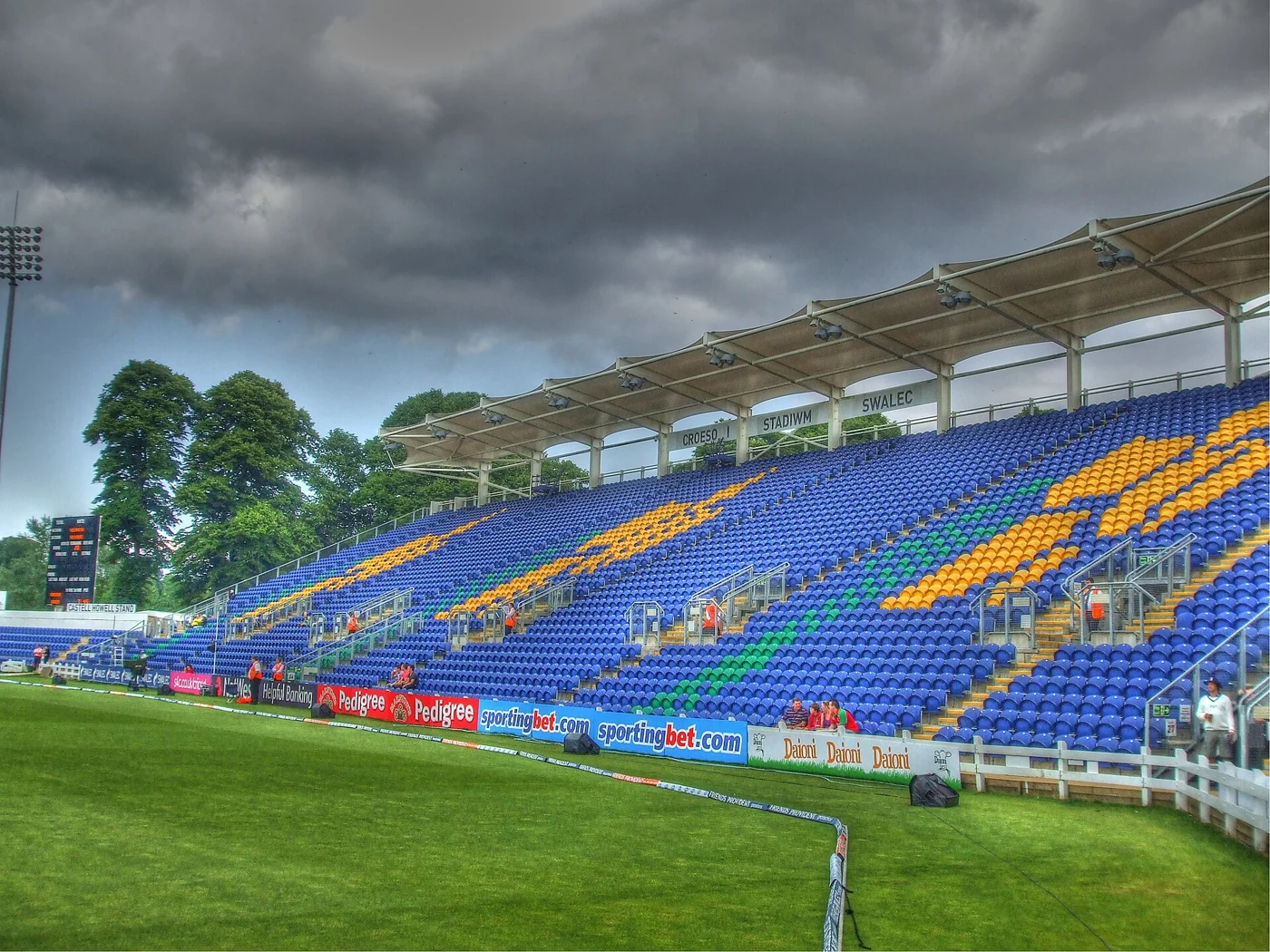
England were at home, playing aggressive one-day cricket and moving through the 2017 Champions Trophy with the confidence of a side expecting to reach the final. Pakistan had begun the tournament with a heavy defeat to India and had needed a difficult escape against Sri Lanka just to get this far.
The semi-final did not follow the expected order.
Hasan Ali kept interrupting England’s innings at the moments when a partnership might have become something substantial. His three for 35 helped restrict the hosts to 211. Junaid Khan and Rumman Raees supported him, the fielding held up, and England never found the late release that their batting depth usually promised.
This was not the version of Pakistan that needed a last pair to improvise a rescue. It was a side controlling the pace of the match. England’s batters had to keep starting again; Pakistan’s bowlers could keep returning to plans that were working.
Fakhar Zaman and Azhar Ali then took the sting out of the chase. Fakhar made 57, Azhar 76, and their opening partnership gave Pakistan room to finish without turning every remaining run into a crisis. An eight-wicket win put Pakistan into their first Champions Trophy final.
Years later, Sarfaraz Ahmed’s account of the campaign gave the semi-final its own simple verdict:
“our bowlers were just superb.”
Sarfaraz Ahmed, recalling the 2017 semi-final against England
The final against India would become the larger national memory. Cardiff deserves to remain a chapter of its own. Beating a fancied host in a semi-final by eight wickets required much more than being unpredictable. Pakistan bowled accurately, made England rebuild repeatedly and then chased with discipline.
The ICC’s semi-final report follows that complete performance. Its key-plays archive lets you return to the wickets that gradually took the match away from England.
Lord’s, 2016: a hundred, ten wickets and the push-ups
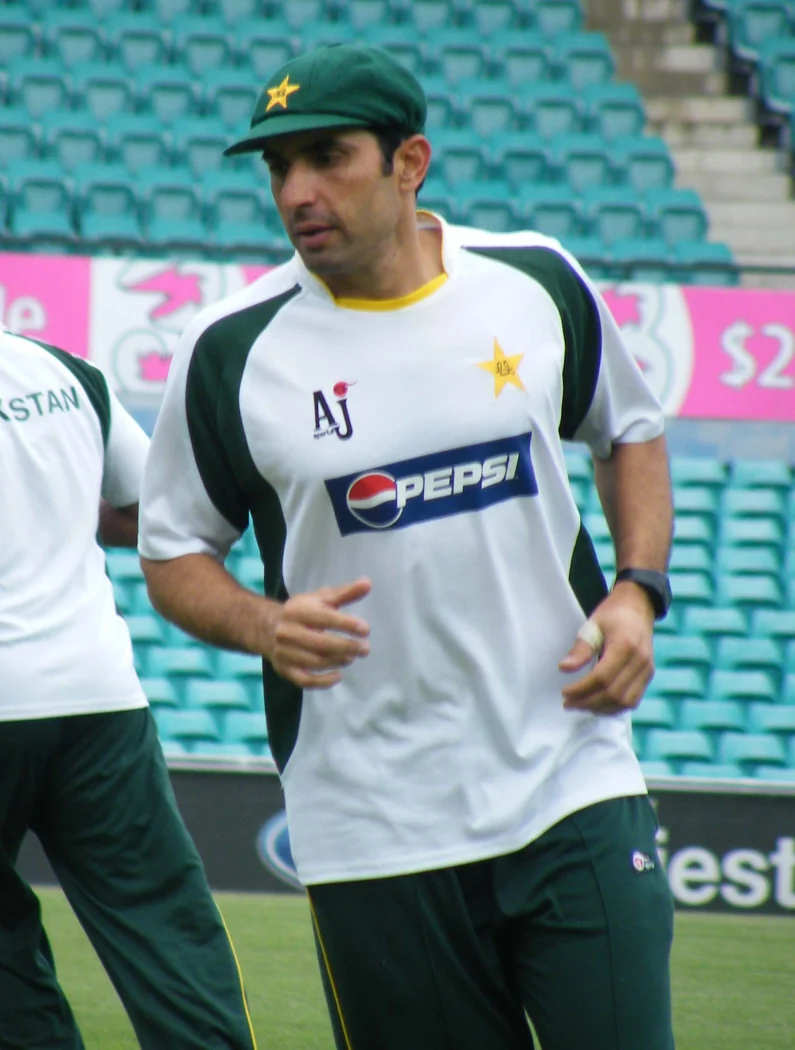
Misbah-ul-Haq was 42 when he played his first Test at Lord’s. Pakistan were 77 for three when he came in, and an important innings began without the luxury of a comfortable scoreboard.
He made 114. Then he removed his helmet, got down on the turf and performed the push-ups that would become the image of the match. It was a celebration with a sense of humour, arriving after an innings that had demanded a great deal of seriousness.
The century helped Pakistan reach 339 in their first innings. Yasir Shah then made the match increasingly difficult for England’s batters, taking ten wickets across the Test. Pakistan won by 75 runs, and the celebration spread beyond the captain to a team enjoying a result they had worked hard to make possible.
It is tempting to remember Lord’s only through the push-ups. The cricket underneath the photograph is what gives the celebration its weight. Misbah had arrived with wickets falling, not with an innings already built for him. Yasir’s leg-spin then gave Pakistan the attacking threat they needed to turn a first-innings effort into a victory.
The rest of the series refused to stay comfortable. England fought back, and Pakistan needed another major performance to finish level. At The Oval, Younis Khan’s double-century helped Pakistan win by ten wickets and make the series 2–2. One tour contained both the smiling Lord’s celebration and the much sterner work required to protect the final result.
Read the ICC’s account of Misbah’s defining innings alongside its Oval series report. Together they explain why 2016 still gives Pakistan supporters so many enjoyable replays.
Multan and Rawalpindi, 2024: Pakistan turn the series around
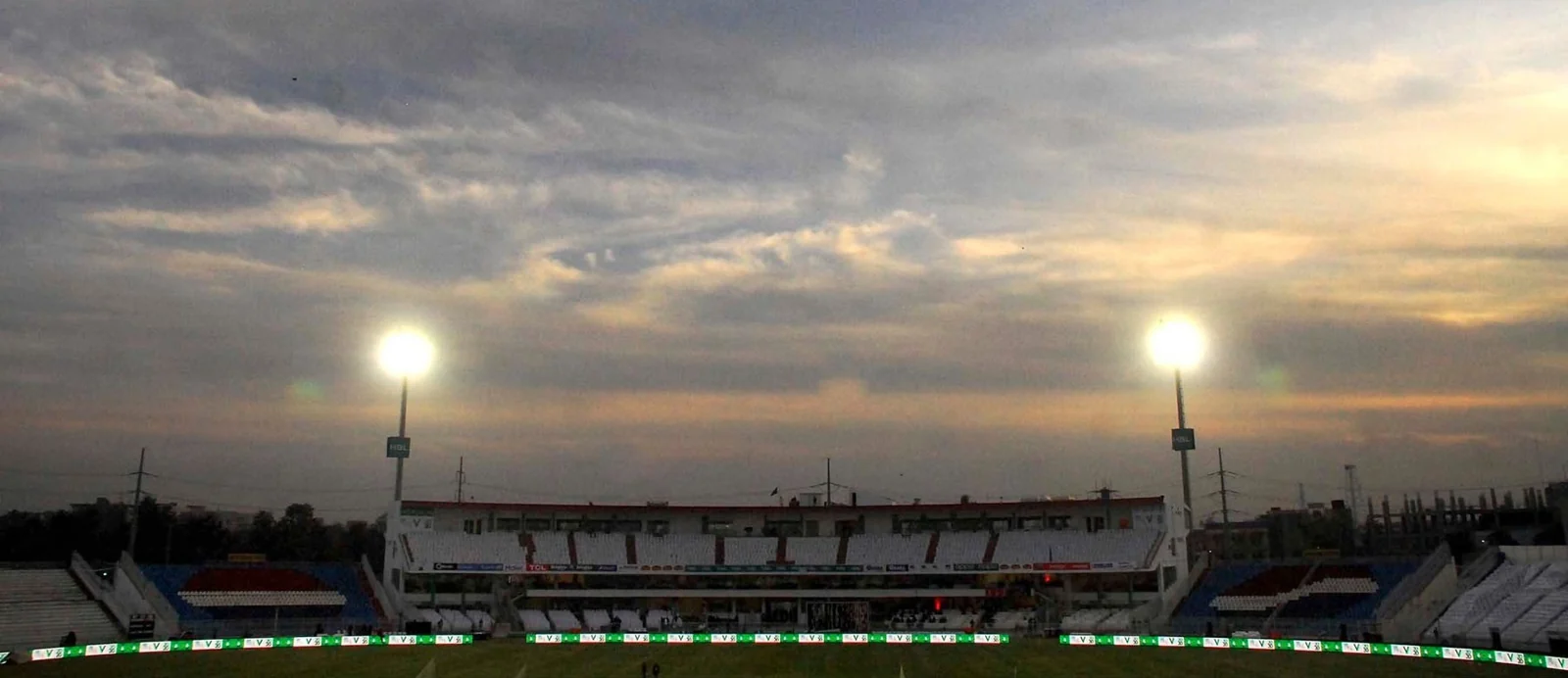
Pakistan scored 556 in the first Test in Multan and still lost by an innings and 47 runs. It was the kind of result that makes even a large first-innings total feel strangely small. England’s reply had overwhelmed them, and the series appeared to be moving in one direction.
Pakistan changed the terms of the contest. On a turning surface in the second Test, Sajid Khan and Noman Ali took all twenty England wickets between them. Sajid took seven in the first innings; Noman took eight in the second. The 152-run win was Pakistan’s first home Test victory since 2021.
Now the same English batters who had made scoring look so easy had to keep judging turn, bounce and the risk of the next attacking shot. Pakistan could surround the bat, maintain pressure from both ends and ask a different question almost every over.
For Shan Masood, who had waited through a painful run of results for his first Test win as captain, the relief was understandable:
“This was a very important win for Pakistan cricket.”
Shan Masood, after the second Test in Multan, October 2024
Rawalpindi still had to be won. England made 267, and Pakistan needed Saud Shakeel’s 134 to build a useful first-innings lead. His contribution matters because the spinners’ story can otherwise make the batting sound automatic. It was not. Shakeel had to keep finding a way through a difficult innings before Pakistan could apply the pressure again.
Noman and Sajid then helped dismiss England for 112. Pakistan won by nine wickets and took the series 2–1. Across the final two Tests, the pair had claimed 39 of England’s 40 wickets.
The turnaround was dramatic, but the winning method was quite clear. Pakistan found conditions in which their selected attack could keep taking wickets, and their batters supplied enough runs to make that attack decisive. England had been dominant in one setting and vulnerable in the next.
The ICC’s Multan report and Rawalpindi series recap preserve a comeback that should caution anyone against declaring this rivalry settled after one result.
Previous matches: what the latest results tell us
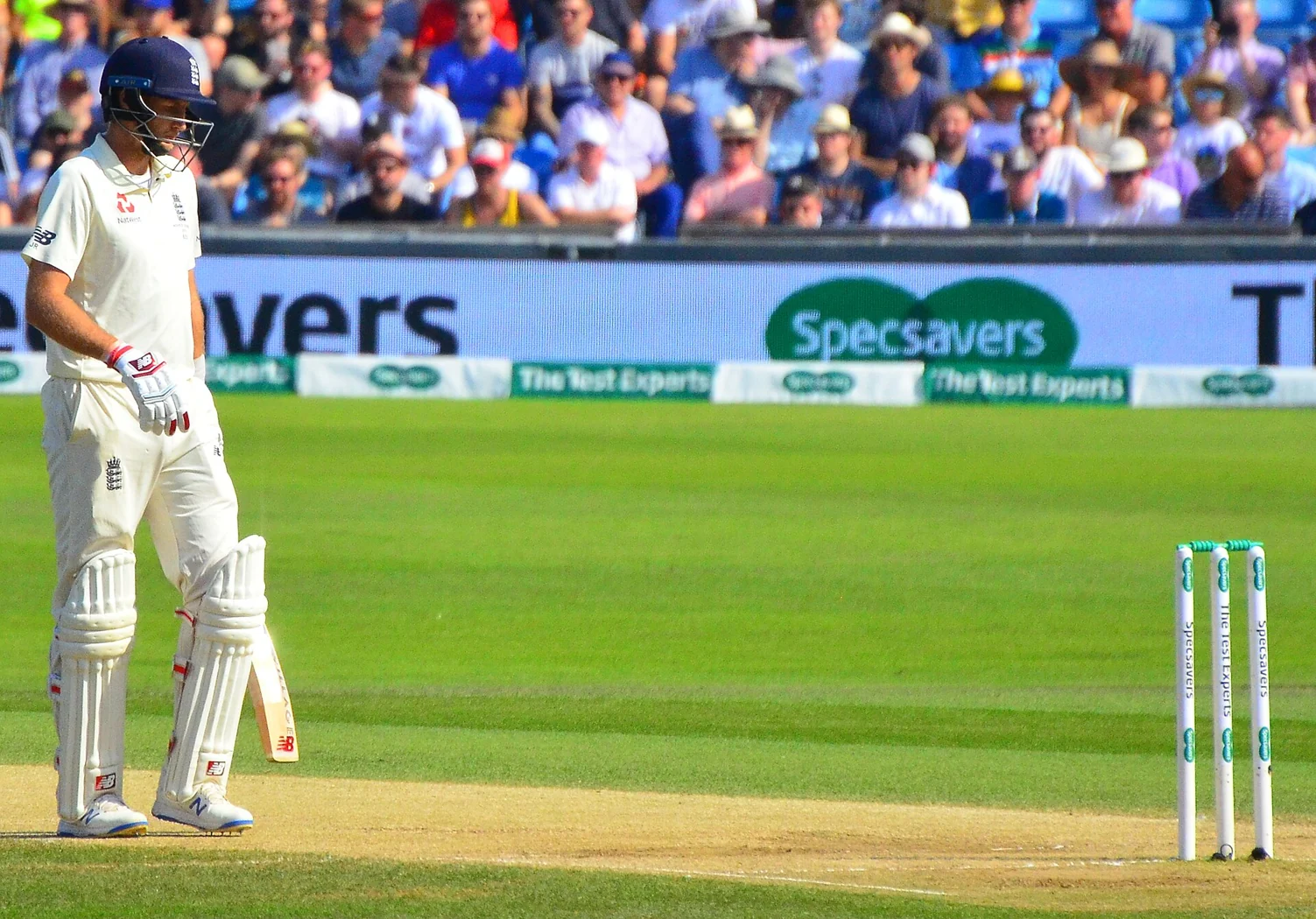
England won the most recent meeting: the third Test at Edgbaston on 12 September 2026, by eight wickets. That completed a 3–0 home series sweep. Pakistan’s 2024 success on turning pitches had not carried over into English conditions.
There was one last uncomfortable moment for England. Chasing 130 at Edgbaston, they slipped to two for two as Mohammad Abbas removed both openers. Joe Root and Jordan Cox then rebuilt with an unbeaten partnership, turning a potentially awkward morning into a comfortable finish.
Pakistan’s second-innings resistance, including a striking debut contribution from Razaullah, had at least forced England to bat again after a first innings of 133. The recovery deserved notice. It did not change the fact that England had controlled the series.
| Date of result | Match | Result |
|---|---|---|
| 12 September 2026 | Third Test, Edgbaston | England won by 8 wickets |
| 30 August 2026 | Second Test, Lord's | England won by 194 runs |
| 21 August 2026 | First Test, Headingley | England won by an innings and 103 runs |
| 24 February 2026 | T20 World Cup, Pallekele | England won by 2 wickets |
| 26 October 2024 | Third Test, Rawalpindi | Pakistan won by 9 wickets |
| 18 October 2024 | Second Test, Multan | Pakistan won by 152 runs |
| 11 November 2023 | Latest ODI, World Cup, Kolkata | England won by 93 runs |
The table includes the latest completed meetings and the most recent ODI. No Pakistan–England ODI had been completed between Kolkata in November 2023 and this article’s update on 19 October 2026.
That gap matters for tomorrow’s preview. The September Tests tell us England recently handled their home conditions much better. They do not tell us exactly how a different England attack will bowl in a Pakistan ODI, or how Pakistan’s batting will respond in a shorter format.
There is fresher Pakistan form available: Salman Ali Agha made 107 from 90 balls in the 37-run win over Sri Lanka on 18 October. England’s first match of the tri-series is against Pakistan. The ICC’s Edgbaston report records the Test-series ending, while its report on Salman’s return to form supplies the immediate ODI context.
Pakistan vs England head-to-head: who has won more?
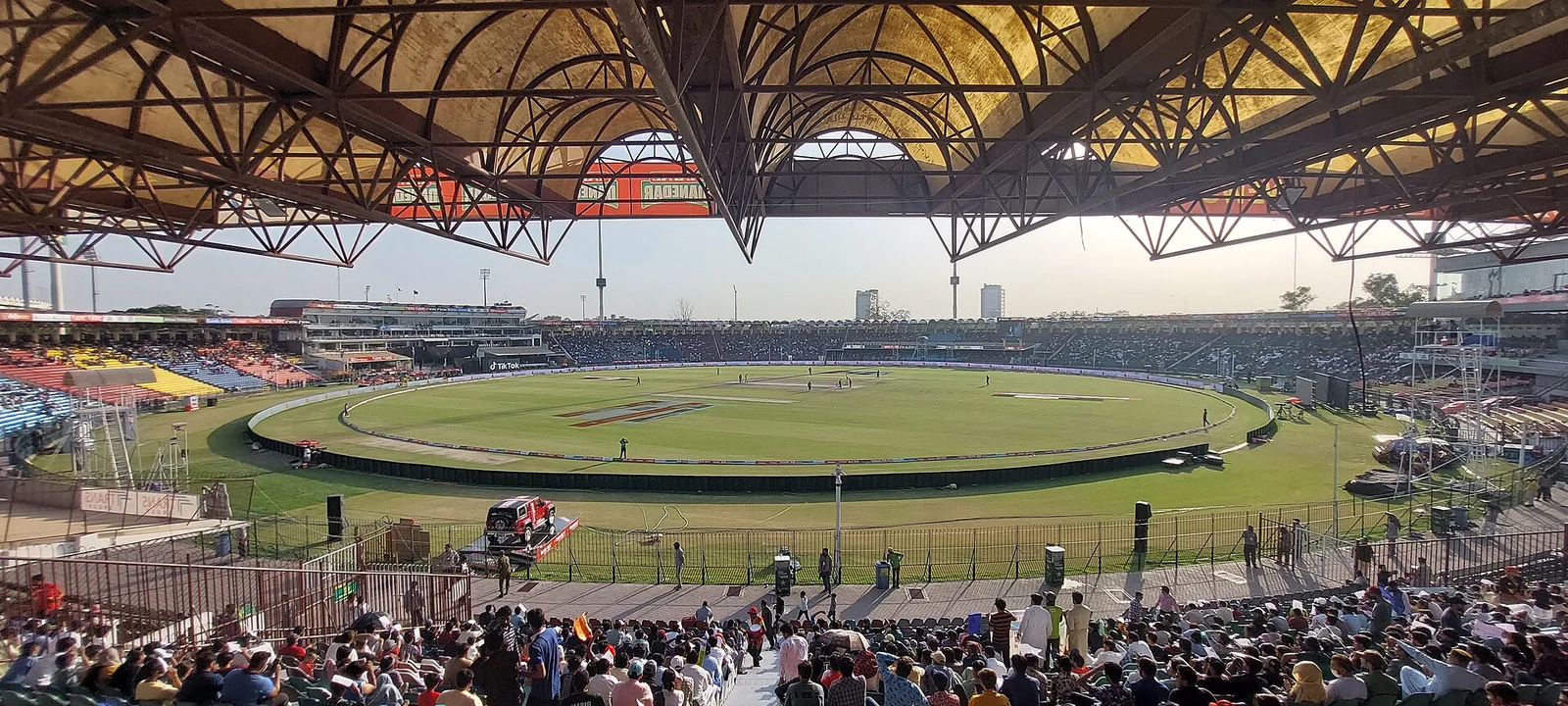
England lead the overall men’s international record. Through 19 October 2026, Pakistan and England have played 219 internationals: 95 Tests, 92 ODIs and 32 T20Is. England have 111 outright wins, Pakistan 64, with 39 draws, one tie and four no-results.
| Format | Matches | Pakistan wins | England wins | Draws | Ties | No results |
|---|---|---|---|---|---|---|
| Tests | 95 | 23 | 33 | 39 | 0 | 0 |
| ODIs | 92 | 32 | 57 | 0 | 0 | 3 |
| T20Is | 32 | 9 | 21 | 0 | 1 | 1 |
| Total | 219 | 64 | 111 | 39 | 1 | 4 |
England also won the Super Over after the tied Sharjah T20I in 2015. Including that tie-break win gives them a 22–9 lead in T20I match outcomes. The ICC’s account of that finish is worth revisiting if you enjoy chases that need an extra chapter.
The format breakdown adds useful perspective. England’s ODI advantage is substantial, while Test history contains a long stretch of draws as well as memorable wins for both sides. A World Cup final or a dominant home series can feel like the whole rivalry when it is the match you grew up with. The wider record gives those memories their proper setting.
For a prediction, keep the history and the immediate match conditions in view together. England’s 57 ODI wins are real. So are Pakistan’s ability to make a new-ball spell count and the advantage of playing at home. Tomorrow’s result still has to be earned on the field.
ODI World Cup results: eleven meetings and a record level at 5-5
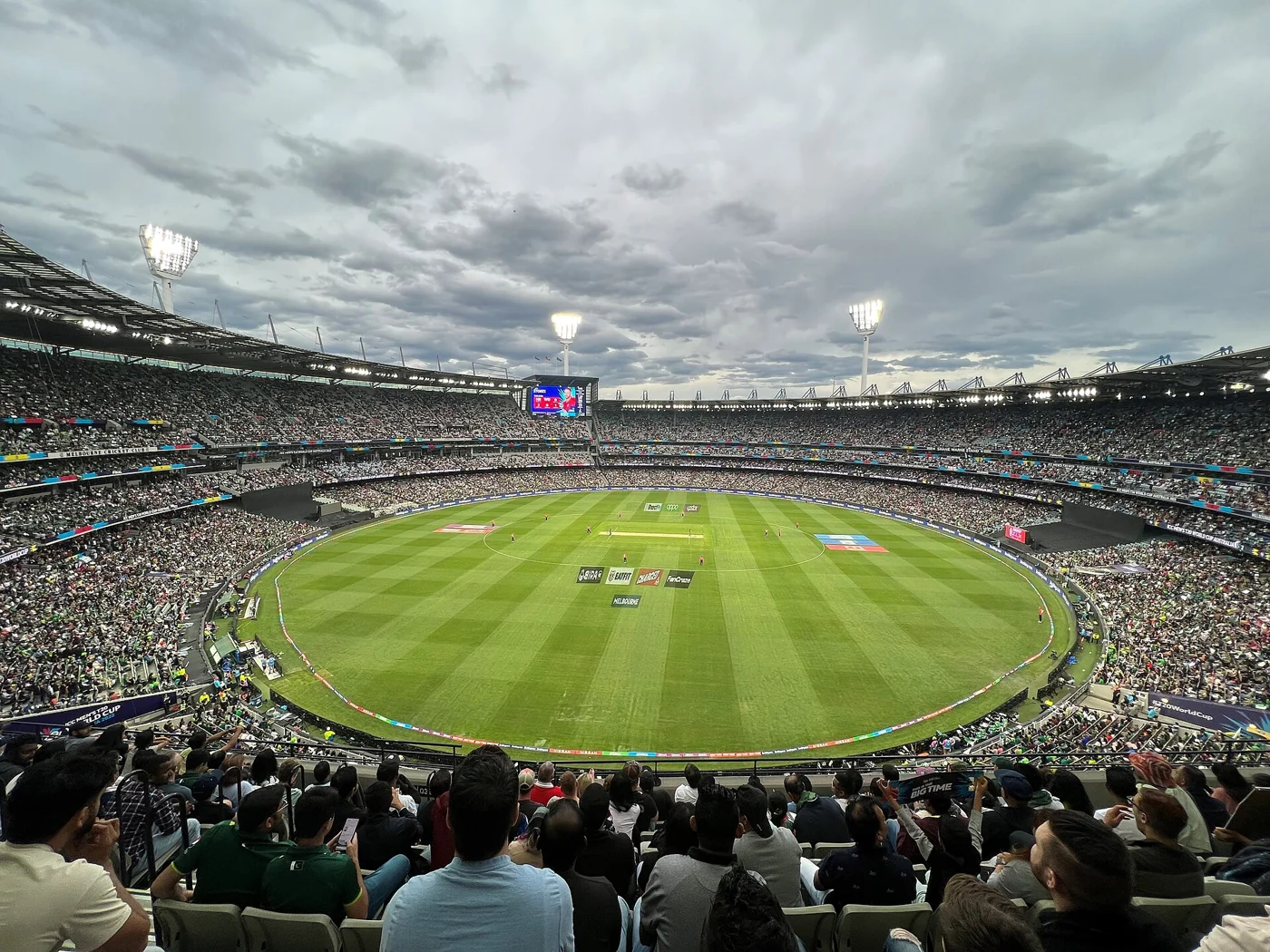
The ODI World Cup head-to-head is level: five wins each from eleven meetings, with one no-result. Pakistan won the only ODI World Cup final between them, in Melbourne in 1992.
| Date | Venue | Result |
|---|---|---|
| 16 June 1979 | Leeds | England won by 14 runs |
| 13 June 1983 | Lord's | England won by 8 wickets |
| 18 June 1983 | Manchester | England won by 7 wickets |
| 12–13 October 1987 | Rawalpindi | Pakistan won by 18 runs |
| 20 October 1987 | Karachi | Pakistan won by 7 wickets |
| 1 March 1992 | Adelaide | No result |
| 25 March 1992 | Melbourne | Pakistan won the final by 22 runs |
| 3 March 1996 | Karachi | Pakistan won by 7 wickets |
| 22 February 2003 | Cape Town | England won by 112 runs |
| 3 June 2019 | Nottingham | Pakistan won by 14 runs |
| 11 November 2023 | Kolkata | England won by 93 runs |
The early contests belonged to England, who won the first three. Pakistan answered twice at home in 1987 and again in the 1992 final. The abandoned Adelaide match is an unusual companion to that final: England had dismissed Pakistan for 74, but rain prevented the chase being completed.
Nottingham in 2019 supplied another of Pakistan’s satisfying reversals. They had opened their tournament with a heavy defeat to West Indies. Against the hosts, Mohammad Hafeez made 84 and Pakistan reached 348 for eight. England’s reply included hundreds from Root and Jos Buttler, but Pakistan held on to win by 14 runs.
It was a victory made more interesting by the quality of the chase. England kept making the target look possible; Pakistan kept finding enough bowling and fielding to prevent possibility becoming a completed pursuit. The ICC’s Nottingham report follows the finish.
England restored parity in Kolkata in 2023, winning by 93 runs. Across the table, there are comfortable chases, a rain escape, a final and a high-scoring thriller. The ICC’s rivalry archive revisits the older meetings that built this unusually even World Cup record.
T20 World Cup results: England’s four wins and the close calls

England have won all four men’s T20 World Cup meetings with Pakistan. The results range from a comfortable group-stage win to a final and a tense chase that needed a captain’s century.
| Date | Venue and stage | Result |
|---|---|---|
| 7 June 2009 | The Oval, group stage | England won by 48 runs |
| 6 May 2010 | Bridgetown, Super Eight | England won by 6 wickets |
| 13 November 2022 | Melbourne, final | England won by 5 wickets |
| 24 February 2026 | Pallekele, Super Eight | England won by 2 wickets |
The 2009 defeat did not stop Pakistan becoming champions later in that same tournament. It is a useful reminder that a head-to-head result and an entire World Cup campaign are different stories. England won the meeting; Pakistan finished with the trophy.
The most recent encounter, at Pallekele in February 2026, nearly offered Pakistan a breakthrough. Defending 164 for nine, they reduced England to 58 for four. Harry Brook then made 100 from 51 balls, the first century by a captain in men’s T20 World Cup history.
Even his innings did not turn the finish into a formality. England lost eight wickets before reaching the target in 19.1 overs. Pakistan had created the kind of position from which a good bowling side expects to win, but Brook’s attack kept changing the equation.
The ICC’s Pallekele report and official match highlights show why the two-wicket margin tells a more compelling story than the four-match winning streak alone.
Pakistan vs England player records: runs, wickets and the names behind them
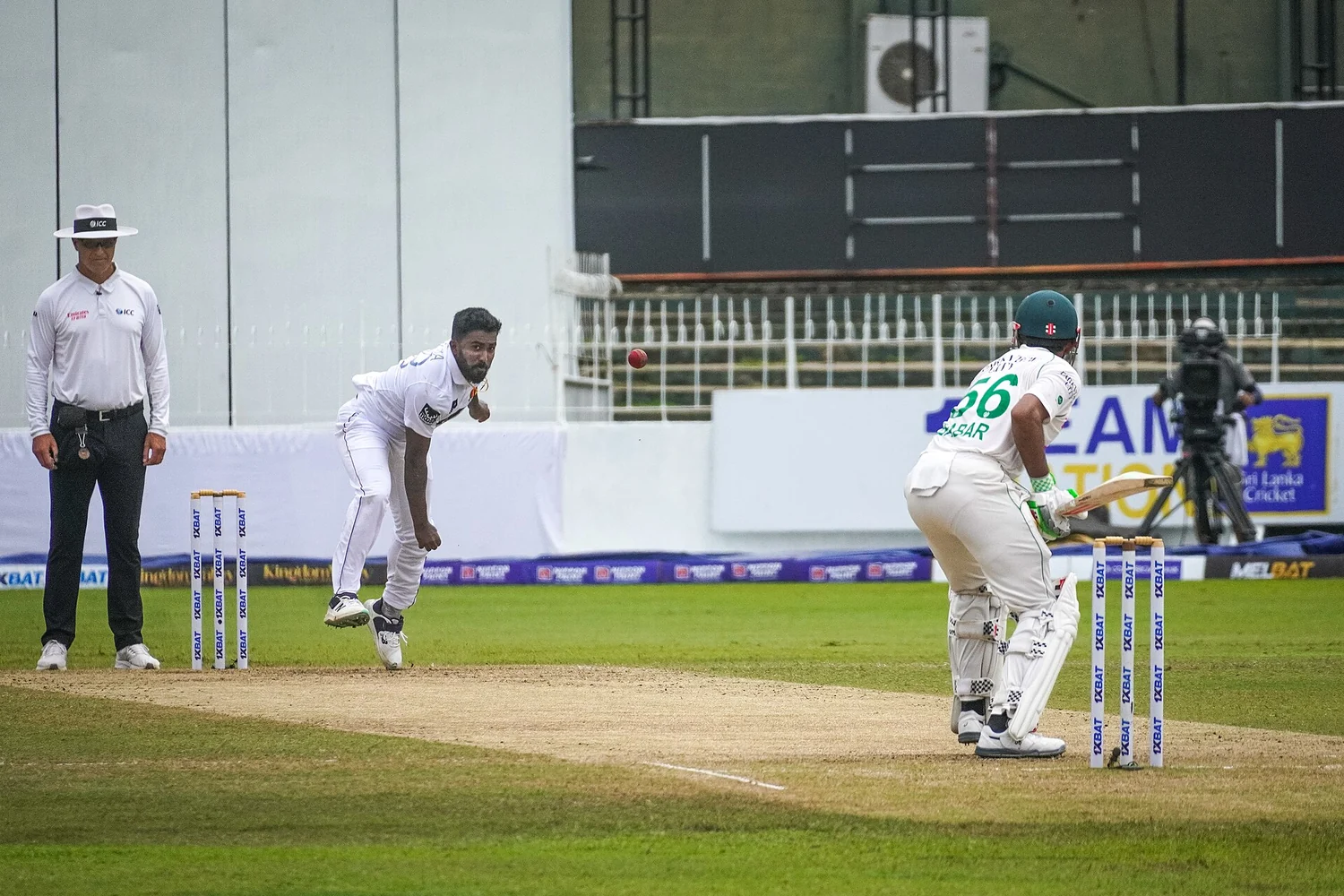
Javed Miandad has the most ODI runs in this rivalry, with 991. Among current players in the announced ODI squads, Babar Azam and Joe Root already have substantial records against these opponents. Babar has 854 runs in 20 matches; Root has 835 from 17.
| ODI batter | Team | Matches | Runs |
|---|---|---|---|
| Javed Miandad | Pakistan | 27 | 991 |
| Babar Azam | Pakistan | 20 | 854 |
| Inzamam-ul-Haq | Pakistan | 28 | 835 |
| Joe Root | England | 17 | 835 |
| Allan Lamb | England | 22 | 830 |
| Eoin Morgan | England | 24 | 830 |
Miandad’s place at the top connects the present rivalry to its earlier demands: batting through difficult passages, preserving wickets and trusting the innings to become easier later. Babar and Root face a different scoring environment, but the value of staying long enough to shape a chase remains familiar.
Root’s ODI average against Pakistan is 52.18; Babar’s against England is 47.44. Neither figure promises a score tomorrow. They do explain why removing either batter can change more than the wicket count. A settled Root or Babar can give the rest of the order clearer choices about when to attack.
Leading ODI wicket-takers in Pakistan–England matches
| Bowler | Team | Wickets | Best innings figures |
|---|---|---|---|
| Shoaib Akhtar | Pakistan | 34 | 5/54 |
| Shahid Afridi | Pakistan | 34 | 5/40 |
| Wasim Akram | Pakistan | 32 | 3/25 |
| Chris Woakes | England | 31 | 5/54 |
| Waqar Younis | Pakistan | 30 | 7/36 |
| James Anderson | England | 29 | 4/27 |
The bowling list offers several routes to the same problem. Shoaib could make pace itself the disruption. Afridi could hurry an innings through the middle overs. Wasim could change what the batter expected the ball to do. Woakes and Anderson repeatedly made early movement and sustained accuracy valuable against Pakistan.
Waqar’s seven for 36 remains a remarkable individual performance in the ODI record. It sits alongside the shorter, more frequently replayed spells: Wasim’s two-in-two in the final, Hasan’s three wickets at Cardiff, and Curran’s pressure in Melbourne. Some performances are remembered for the volume of wickets; others for the moment the wickets arrived.
These are opponent-specific ODI statistics through 19 October 2026, rather than players’ full career totals. For the next match, the older names supply context. The live contest belongs to the players selected from today’s squads, including Babar, Root, Brook, Shaheen, Rashid and Salman.
Pakistan vs England schedule: the next match and the 2027 route
The next announced Pakistan vs England match is an ODI on 20 October 2026 at Rawalpindi Cricket Stadium. The teams meet again on 25 October at Gaddafi Stadium, Lahore. Both games are part of the tri-series with Sri Lanka; a further meeting in the final depends on qualification.
| Date | Competition | Venue | Status |
|---|---|---|---|
| 20 October 2026 | ODI tri-series | Rawalpindi | Scheduled Pakistan vs England match |
| 25 October 2026 | ODI tri-series | Lahore | Scheduled Pakistan vs England match |
| 31 October 2026 | Tri-series final | Lahore | Only if both teams qualify |
| 15 May 2027 | First ODI in England | Southampton | Scheduled |
| 19 May 2027 | Second ODI in England | Manchester | Scheduled |
| 21 May 2027 | Third ODI in England | Leeds | Scheduled |
| 23 May 2027 | Fourth ODI in England | Chester-le-Street | Scheduled |
| 26 May 2027 | Fifth ODI in England | Cardiff | Scheduled |
| 30 October 2027 | World Cup Super Seven | Victoria Falls | Conditional on qualification in the listed slots |
The 2027 World Cup entry is a possible meeting, not a confirmed group fixture. Pakistan and England are in different groups. The published Super Seven schedule places their seeded slots together in Victoria Falls, but both teams must first reach that stage in those slots.
Before any possible World Cup meeting, the five ODIs in England offer a substantial contest of their own. A series allows teams to adjust after a defeat, identify which matchups keep recurring and test whether an answer that worked at one ground still works at the next.
For the immediate fixtures, use the ICC’s tri-series announcement and Rawalpindi match centre for confirmed match-day information. The 2027 home schedule and official World Cup fixture list cover the later dates. Our Pakistan cricket schedule and 2027 World Cup guide provide the wider picture.
Who is favourite, and which players could decide the next ODI?
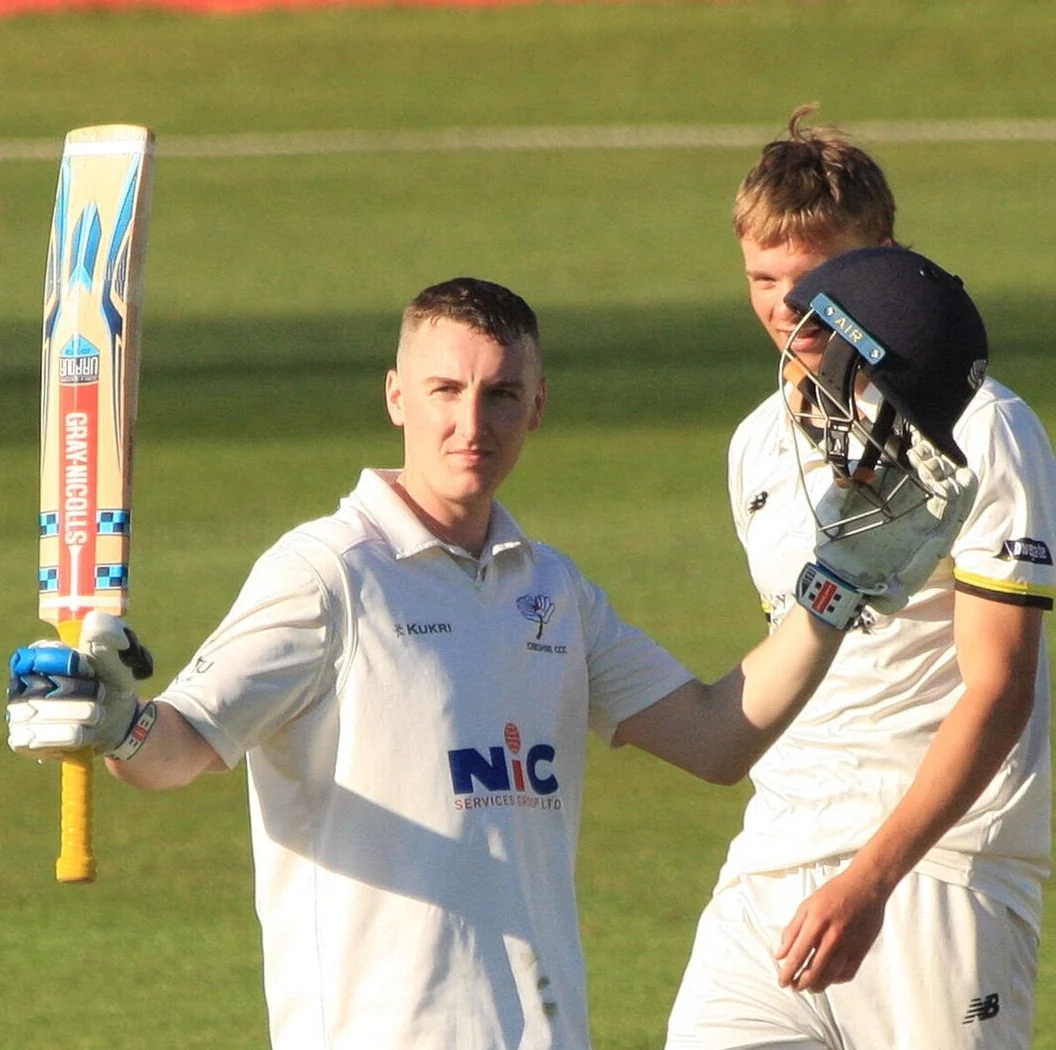
Our early editorial assessment gives England a narrow edge for the next ODI, with Pakistan a serious threat at home. England’s ODI depth and the presence of Root, Brook and Rashid support that view. Pakistan’s new-ball attack, home conditions and Salman’s immediate form make a confident one-sided prediction difficult to justify.
This assessment concerns the Rawalpindi ODI on 20 October 2026. It is not a betting price or a forecast for a possible World Cup meeting a year away. The final eleven and pitch can still change the balance.
Shaheen against England’s top order. Pakistan’s most convincing route begins with wickets rather than merely a tidy first ten overs. Shaheen can make England rebuild before their middle order has a platform to attack. England’s answer is to avoid allowing one good over to become a cluster of wickets: leave the best deliveries, rotate when the field allows it and keep enough batting available for later.
Babar against Adil Rashid. If both are selected, this is a central middle-over contest. Rashid would want to make a new batter negotiate spin while Pakistan are trying to build. Babar would want singles available early enough that the boundary shot remains a choice rather than an escape from pressure. His record against England gives Pakistan a proven anchor, but the supporting partnerships still have to last.
Brook against Pakistan’s pace changes. Pallekele showed how quickly Brook can turn a chase after early wickets. Pakistan need a plan for his scoring areas and a willingness to change the pace and field together. Haris Rauf’s role, if selected, would be to create pressure without feeding the same attacking option repeatedly. England would want Brook arriving with enough time to settle, rather than needing another rescue immediately.
Salman against England’s middle-over control. His 107 against Sri Lanka gives Pakistan an in-form batter beyond the familiar top-order names. England’s squad contains Rashid, Liam Dawson and Mason Crane, offering different spin options. Pakistan need to keep moving the score during their spells so the final ten overs do not begin with too much rebuilding left to do.
Curran and the finish. His 2022 final is a reminder that changes of pace can be more valuable than simply bowling faster. Pakistan’s finishers need to identify which boundaries are realistically available and avoid leaving every scoring opportunity to a desperate final over. England need the same clarity when facing Shaheen and Pakistan’s supporting quicks late in a chase.
The announced squads also change the familiar picture. England are without Jos Buttler through injury and have rested Jofra Archer. Brook leads the ODI side; Shaheen captains Pakistan. Those are the current roles, rather than assumptions carried over from the 2022 final.
Pakistan’s winning route is clear enough: early wickets, a substantial partnership around Babar or another top-order batter, and useful runs from Salman and the lower middle order. England’s route is to absorb the new ball, keep Pakistan’s innings from accelerating through the middle, and arrive at the finish with batting resources intact. Whichever side completes those less glamorous tasks will have less need for a miraculous ending.
Pakistan vs England questions fans ask
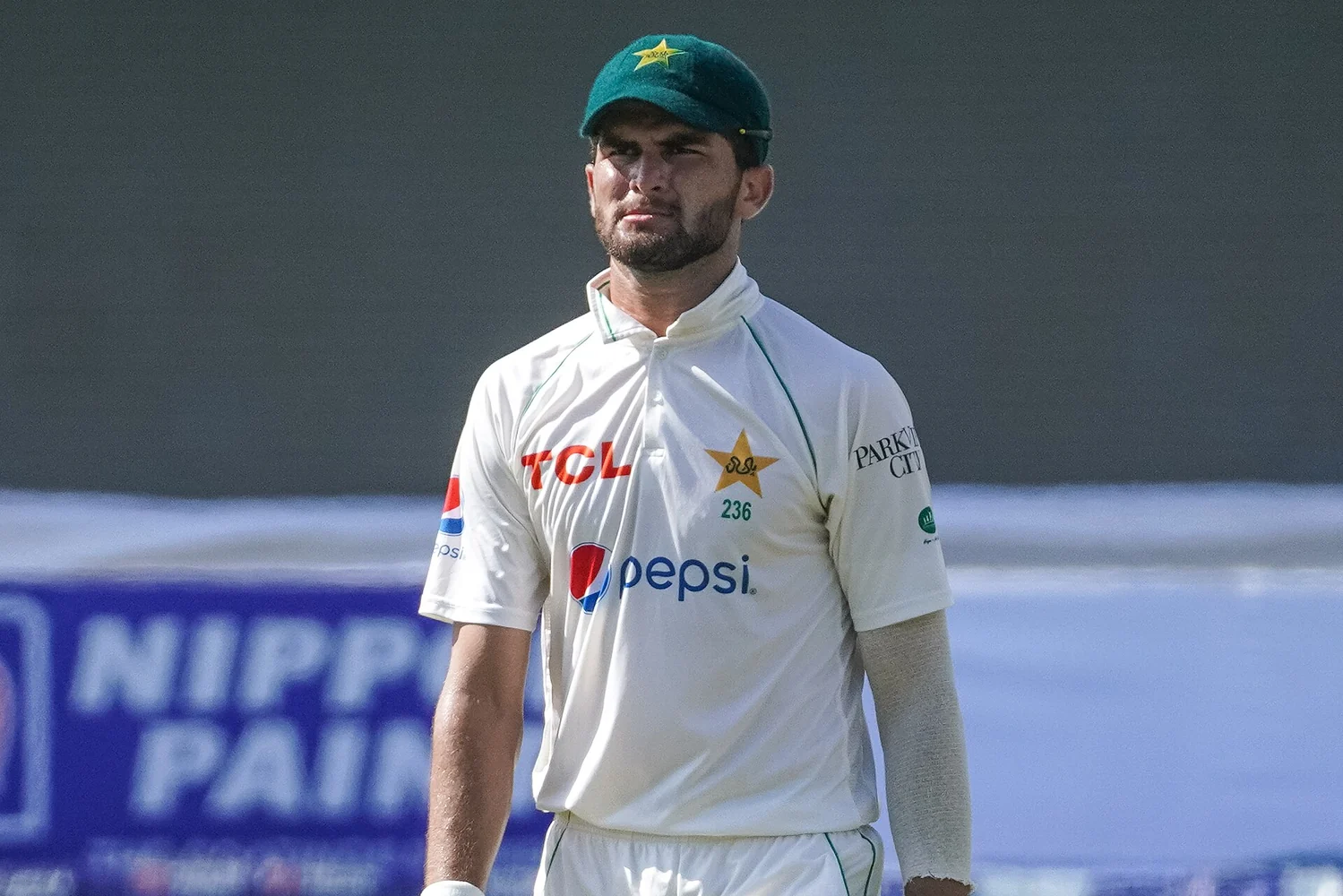
Who has won more matches between Pakistan and England? England lead across senior men’s internationals. Through 19 October 2026, they have 111 outright wins to Pakistan’s 64 from 219 matches. England also won the Super Over after the tied Sharjah T20I in 2015.
How many ODI World Cup matches have they played? Eleven. Pakistan and England have five wins each, with the 1992 group meeting ending without a result. Pakistan won their only ODI World Cup final against each other by 22 runs in 1992.
Who leads in T20 World Cups? England lead 4–0. Their wins came in 2009, 2010, the 2022 final and the 2026 Super Eight match in Pallekele. Pakistan still won the 2009 tournament despite losing that earlier meeting with England.
Who won their latest match? England won the third Test at Edgbaston on 12 September 2026 by eight wickets. Their most recent ODI meeting was at the 2023 World Cup in Kolkata, also won by England.
Who has the most ODI runs between the teams? Javed Miandad leads with 991. Babar Azam has 854 and Joe Root 835. Shoaib Akhtar and Shahid Afridi share the ODI wicket-taking lead with 34 each.
When is their next match? The next scheduled ODI is on 20 October 2026 in Rawalpindi, followed by another in Lahore on 25 October. A tri-series final between them on 31 October is possible only if both qualify.
Will they meet at the 2027 World Cup? There is no Pakistan–England group match. Their listed Super Seven slots meet in Victoria Falls on 30 October 2027, subject to qualification. That should remain a conditional fixture until the tournament establishes the actual participants.
For another set of unforgettable finishes, read Pakistan vs Australia and India vs Pakistan. More records, fixtures and explainers are collected in our cricket hub.
Which Pakistan–England memory would you show someone who has never watched this rivalry: Wasim’s two deliveries, Misbah’s Lord’s celebration, Cardiff’s bowling performance or Stokes at Melbourne? Leave your choice in the comments, and tell us which match deserves a closer look next.