
World Cup 2026 Semi-Finals: Results, Recap and the Road to the Final
The World Cup 2026 semi-finals were billed as the strongest last four in the tournament’s history, and somehow they still exceeded the hype. For the first time ever, the semi-final places were filled by the top four ranked teams on the planet, and the two matches gave us a Spanish masterclass and an Argentine comeback that will be talked about for years. When it was over, Spain and defending champions Argentina had booked their places in Sunday’s showpiece. This is your complete guide to the World Cup 2026 semi-finals: both results, an in-depth recap of each game, the historic rivalry that lit up Atlanta, and everything about the final and third-place play-off that followed.
Last updated: July 20, 2026.
World Cup 2026 semi-finals: How the semi-finals work
The four quarter-final winners met in two single-elimination semi-finals. As with every knockout tie at this tournament, a game level after 90 minutes would go to 30 minutes of extra time, and then a penalty shootout if the sides could still not be separated. The two winners advanced to the final on July 19, while the two beaten teams dropped into the third-place play-off. Both semi-finals were staged in the United States, the first at AT&T Stadium in Arlington, near Dallas, and the second at Mercedes-Benz Stadium in Atlanta. There was no margin for error, and neither game disappointed.
World Cup 2026 semi-final results
Here is how the last four finished. All times ET.
| Date | Tie | Result | Venue |
|---|---|---|---|
| Tue, Jul 14 | Spain vs France | 2-0 | AT&T Stadium, Arlington |
| Wed, Jul 15 | Argentina vs England | 2-1 | Mercedes-Benz Stadium, Atlanta |
Spain 2-0 France: a defensive masterclass

The first semi-final had been billed as the final before the final. On one side stood France, the tournament’s most feared attack, boasting Kylian Mbappe, Ousmane Dembele and a forward line that had won every match inside 90 minutes. On the other stood Spain, unbeaten and utterly miserly, the owners of the meanest defence the competition had seen in years. Something had to give, and in the end it was one-way traffic in favour of La Roja.
Spain settled the contest with goals in each half and a performance of total control. The breakthrough came in the 22nd minute. Teenage sensation Lamine Yamal, the brightest young talent in world football, drove into the box and was brought down, and Mikel Oyarzabal stepped up to convert the penalty with ice in his veins. From there, Spain simply strangled the game, dominating possession and refusing to let France’s dangerous forwards breathe.
The second goal, in the 58th minute, put the result beyond doubt. Full-back Pedro Porro struck to make it 2-0, and Spain saw out the closing stages with the calm of a team that knew it belonged in the final. Goalkeeper Unai Simon barely had a save to make and recorded his sixth clean sheet of the tournament, an astonishing return that underlines how few chances Spain concede. Across the whole competition, they have given up just a single goal.
For France, it was a chastening night. They had been attempting to reach a third consecutive World Cup final, a feat no nation has achieved in the modern era, but they never got going against a Spanish side that had clearly done its homework. Mbappe, so devastating throughout the tournament, was kept quiet, and Les Bleus were left to regroup for the third-place play-off. For Spain, it was a first World Cup final since 2010, the year they lifted the trophy for the only time in their history.
Argentina 2-1 England: another miraculous comeback
If the first semi-final was a masterclass, the second was pure theatre. Argentina against England is one of international football’s most charged rivalries, and the meeting in Atlanta carried decades of history, tension and pride. It delivered a finish that few who watched it will ever forget.
For long stretches, it was a cagey, nervous affair. Remarkably, neither side managed a single shot in the opening 30 minutes, a reflection of just how much was at stake and how cautiously both teams approached the occasion. The deadlock was finally broken in the 55th minute, and it was England who struck first. Anthony Gordon fired the Three Lions ahead, sending the English supporters into raptures and putting Thomas Tuchel’s side within touching distance of a first World Cup final in 60 years.
But Argentina, the death-defying defending champions, do not know when they are beaten. As the clock ticked down, they turned the screw, throwing everyone forward and laying siege to the England goal. The pressure told in the 85th minute. Enzo Fernandez, who had been peppering Jordan Pickford’s goal all evening, controlled a pass from Lionel Messi on the edge of the area and unleashed a stunning strike from 20 yards that flew past the England keeper. The equaliser was no more than Argentina’s relentless push deserved.
Then came the dagger. With extra time looming, Messi, at 39 and playing what is almost certainly his final World Cup, produced a moment of pure quality. He floated a cross to the far post in the second minute of stoppage time, and substitute Lautaro Martinez rose highest to head the winner and complete the turnaround. It was a fourth straight knockout comeback for Argentina, following their escapes against Cape Verde, Egypt and Switzerland, and it sent them into their seventh World Cup final. Messi, who assisted both goals, became just the second player in history, after Brazil’s Cafu, to appear in three World Cup finals. For England, it was a heartbreaking collapse, and their decision to sit deep after Gordon’s goal will be debated for a long time.
The Argentina-England rivalry: history and heartache
Part of what made the second semi-final so gripping was the weight of history behind it. Argentina and England have one of the sport’s most storied and emotional rivalries, and they had not met in a World Cup knockout match since 1998. The two nations carry decades of triumph and desolation at each other’s expense.
The most famous chapter came in 1986, when Diego Maradona knocked England out of the World Cup with two of the most talked-about goals ever scored, the infamous “Hand of God” and a mesmerising solo run often called the Goal of the Century. In 1998, the sides met again in the last 16, with Argentina winning a dramatic penalty shootout after David Beckham was sent off. England gained a measure of revenge in 2002, beating Argentina in the group stage through a Beckham penalty. Beneath all of it lies the shadow of the 1982 conflict between the two countries, which gives every meeting an extra edge. Little wonder that officials worked hard to cool tempers before kickoff in Atlanta, and that the result meant so much to both sets of supporters.
How the two finalists got here
Both finalists have taken very different paths to MetLife Stadium, and those journeys say a lot about who they are.
Spain have been the tournament’s model of consistency and control. After topping their group, they edged Portugal in the Round of 16 thanks to a late Mikel Merino winner, then conceded their first goal of the competition but still saw off Belgium in the quarter-finals, before the emphatic semi-final win over France. Their strength is their balance: a suffocating defence, a possession game few can cope with, and in Yamal a spark of genuine magic. You can trace their route on our World Cup 2026 bracket.
Argentina have done it the hard way at almost every turn. They needed extra time to beat Cape Verde in the Round of 32, came from two goals down to defeat Egypt in the last 16, edged ten-man Switzerland in extra time in the quarter-finals, and then produced their late heroics against England. They are the tournament’s highest-scoring team, and their refusal to accept defeat, allied to the genius of Messi, has carried them to the brink of history. Read more about both sides on our team profiles page, and revisit the previous round on our quarter-finals guide.
The final: Spain vs Argentina
The World Cup 2026 semi-finals set up a final for the ages, and Spain finished the job. They beat Argentina 1-0 after extra time on Sunday, July 19 at MetLife Stadium in East Rutherford, New Jersey, with substitute Ferran Torres scoring the only goal in the 106th minute. Argentina, reduced to ten men after Enzo Fernandez was sent off in stoppage time at the end of normal time, failed to register a single shot on target across the 120 minutes.
Argentina were chasing history and fell one game short. No nation has won back-to-back World Cups since Brazil in 1958 and 1962, and that record survives. Instead of the perfect ending to a glittering career, Messi was left in tears at the final whistle in what was in all likelihood his last act on the World Cup stage. Spain, meanwhile, claimed a second world title and a first since 2010, justifying their billing as narrow favourites on the back of their defensive dominance. Interestingly, the bookmakers make Argentina the underdogs, a label this team has worn and defied all tournament. Everything you need for the showpiece is on our complete World Cup 2026 final guide.
The third-place play-off: England 6-4 France
The two beaten semi-finalists met in the third-place play-off on Saturday, July 18 at Hard Rock Stadium in Miami, and produced one of the wildest games of the entire tournament. England won 6-4 in a ten-goal thriller, racing into a 4-0 lead by half-time before France mounted a furious second-half comeback. Bukayo Saka scored a hat-trick to become only the fourth England player ever to register a treble at a World Cup, while Kylian Mbappe struck twice in the rally that carried him to the Golden Boot.
The Golden Boot race heading into the final
The battle for the tournament’s top scorer award ran to the final weekend, and it was Kylian Mbappe who won it. He and Lionel Messi went into the closing games level on eight goals, but Mbappe’s brace in the third-place play-off took him to ten and left Messi needing a hat-trick in the final to catch him. Spain never allowed that, and Messi finished second on eight goals. Mbappe became the first player in history to win the Golden Boot twice. Follow the full race on our Golden Boot page.
What the semi-finals told us
The World Cup 2026 semi-finals gave us two very different blueprints for success. Spain showed that control, discipline and a watertight defence can neutralise even the most dangerous attack, while Argentina proved once again that spirit, belief and a touch of Messi magic can overcome any deficit. For France and England, there was heartbreak and plenty to reflect on. What is certain is that the final between Spain and Argentina pits two worthy teams against each other, and whichever way it goes, this tournament is heading for an unforgettable conclusion. Official information is available on FIFA’s site.
Frequently asked questions
What were the World Cup 2026 semi-final results? Spain beat France 2-0, and Argentina beat England 2-1.
Who won the World Cup 2026 final? Spain. They beat Argentina 1-0 after extra time at MetLife Stadium on Sunday, July 19, with Ferran Torres scoring in the 106th minute.
How did Argentina beat England? England led through Anthony Gordon in the 55th minute, but Enzo Fernandez equalised in the 85th and Lautaro Martinez headed a stoppage-time winner, with Lionel Messi assisting both goals.
How did Spain beat France? Spain won 2-0 through a Mikel Oyarzabal penalty and a Pedro Porro strike, with Unai Simon keeping a clean sheet.
Who played in the third-place match? France played England on 18 July 2026 in Miami. England won 6–4. See England’s official tournament record for the completed result.
Why was this semi-final field special? For the first time in World Cup history, the semi-finals featured the top four ranked teams in the world: France, Argentina, Spain and England.
Did Argentina win back-to-back World Cups? No. They lost the final 1-0 to Spain, so no team has retained the trophy since Brazil in 1962.
World Cup 2026 collectible
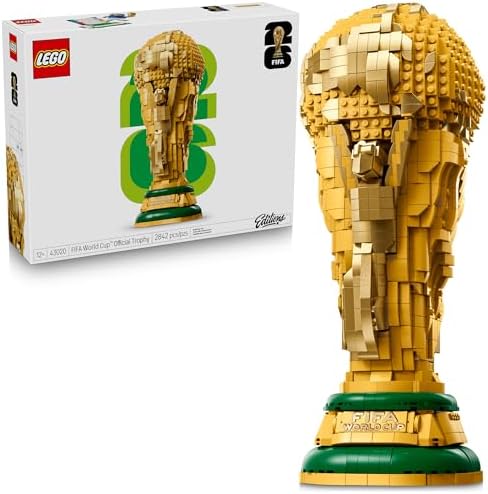
- BUILDING TOY FOR SOCCER FANS – The LEGO Editions FIFA World Cup Official Trophy (43020) building set for boys, girls, an…
- AUTHENTIC DETAILS – This collectible model features 2 stylized human figures holding up the Earth, plus the iconic globe…
- HIDDEN COMPARTMENT – The top globe opens to reveal a FIFA World Cup 2026 branded minifigure holding a mini trophy and a …
As an Amazon Associate, WorldCupWatch earns from qualifying purchases.
More World Cup 2026 coverage
- Round of 16 recap: the round the hosts fell.
- Round of 32 results and the biggest early shocks.
- Final group tables for all 48 teams.
- Where to watch, country by country.
Related Football coverage
Football news and guides
Browse competition coverage, club stories and the Football article directory.
FIFA World Cup 2026 guide
Start with the tournament format, then follow the standings, scorers and knockout references.